


Best Interactive Dog Toys for Enrichment: 10 Top Picks
Table of Contents
- Why Mental Stimulation Matters for Dogs
- How to Choose the Right Interactive Dog Toy
- Best Interactive Dog Toys: Complete Comparison
- Mental Stimulation Games for Dogs at Home
- How to Keep a Dog Busy While at Work
- Durable Puzzle Toys for Aggressive Chewers
- Toy Rotation Strategies for Long-Term Engagement
- Interactive Play for Senior Dogs
Best Interactive Dog Toys for Enrichment: 10 Top Picks
Last Updated: August 3, 2026
Why Mental Stimulation Matters for Dogs
Dogs require mental stimulation as much as physical exercise. Without cognitive enrichment, boredom leads to destructive behaviors, chewing furniture, excessive barking, and anxiety. Interactive dog toys address this need by engaging problem-solving abilities, satisfying natural instincts, and keeping minds active throughout the day.
At Pet-MALL, we understand that enrichment is essential for a dog's overall well-being. Mental stimulation reduces stress, prevents behavioral problems, and strengthens the bond between dog and owner through interactive play.
An engaged dog is a well-behaved dog. Whether your dog is high-energy, a senior, or a puppy learning impulse control, mental enrichment through interactive play is essential.
How to Choose the Right Interactive Dog Toy
Selecting the right enrichment toy depends on your dog's age, size, chewing intensity, and play style. Match the toy to your dog's play preferences, some love puzzle toys that dispense treats; others prefer toys that engage prey drive or encourage foraging behaviors.
Evaluate supervision requirements. Some toys are safe for unsupervised play, while stuffable toys need oversight to prevent choking. Check that materials are non-toxic, durable, and BPA-free.
| Factor | What to Look For | Why It Matters |
|---|---|---|
| Chew Resistance | Reinforced rubber, thick material | Prevents toy destruction and choking hazards |
| Size | Matches dog's mouth and paw size | Too small = choking risk; too large = frustration |
| Difficulty Level | Adjustable or progressive | Keeps dog engaged without causing frustration |
| Material | Non-toxic, durable rubber or fabric | Ensures safety during extended play |
| Cleaning | Dishwasher safe or easily washable | Prevents bacterial growth and odors |
Best Interactive Dog Toys: Complete Comparison
1. KONG Classic Dog Toy, Best Overall for Mental Stimulation
The KONG Classic remains the gold standard for interactive enrichment. This hollow rubber toy can be stuffed with kibble, treats, or KONG's proprietary pastes, creating an engaging puzzle that keeps dogs occupied for extended periods. Freeze a stuffed KONG overnight to extend playtime during separation anxiety episodes.
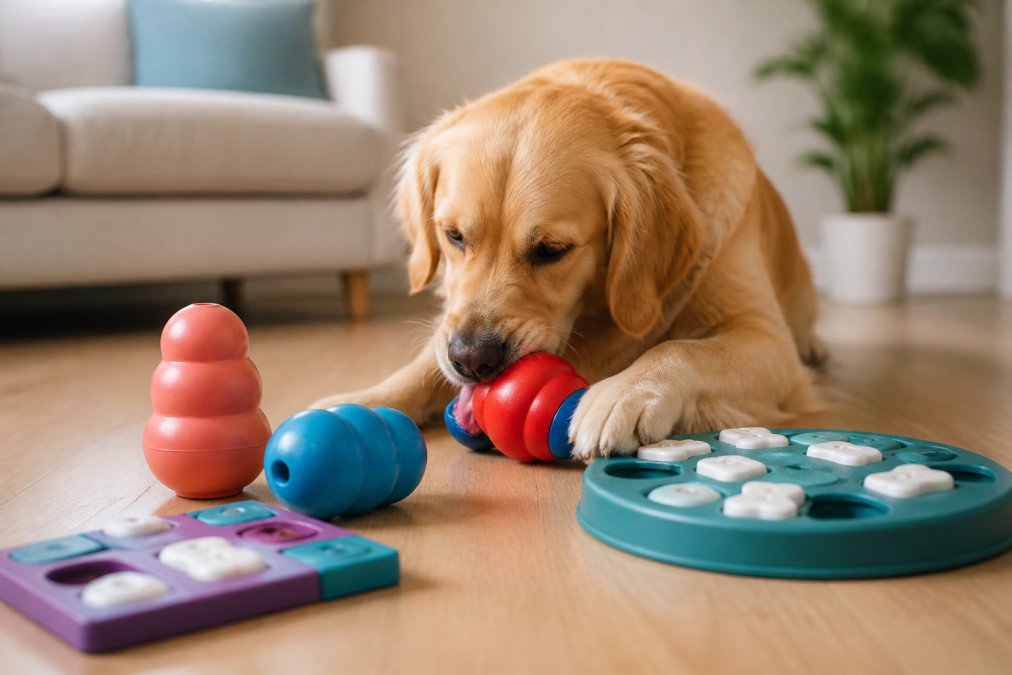
The natural rubber formula is safe for average chewers and has been recommended by veterinarians for decades. Aggressive chewers may eventually puncture it; KONG offers their Extreme line with thicker rubber for those dogs.
Best for: Dogs with moderate chewing intensity, separation anxiety, and dogs who respond to treat-based motivation.
2. Outward Hound Hide-A-Squirrel, Best for Prey Drive Engagement
This puzzle toy taps directly into a dog's natural hunting instinct. The soft plush tree trunk contains multiple squeaky squirrels that dogs must extract through openings. It combines the comfort of plush with the cognitive challenge of problem-solving.
Hide-A-Squirrel works particularly well for dogs who enjoy shaking, carrying, and manipulating toys. Available in multiple sizes, it accommodates dogs of all breeds. Aggressive chewers will destroy the plush material quickly.
Best for: Gentle to moderate chewers who have a strong prey drive and enjoy interactive problem-solving.
3. Nina Ottosson Dog Puzzle Toys, Best for Progressive Difficulty Levels
Nina Ottosson puzzles offer structured mental challenges with four difficulty levels, from simple flipping to complex multi-step sequences. This progressive system prevents boredom, as your dog masters one level, you advance to the next, maintaining consistent cognitive engagement.
Durability is solid for dogs that don't aggressively chew. Each puzzle is easy to clean by hand washing, and treats are simple to load and refill.
Best for: Dogs of all ages who enjoy working for rewards and benefit from structured, progressive mental challenges.
4. StarMark Bob-A-Lot, Best for Slow Feeding and Extended Engagement
The Bob-A-Lot wobbles and bobs unpredictably, dispensing treats as your dog nudges and manipulates it. This toy serves dual purposes: it slows down fast eaters and provides extended mental engagement through unpredictable movement. Adjustable openings let you control difficulty and extend playtime significantly.
Many owners use it to dispense their dog's entire daily kibble allowance, turning feeding into an interactive game. This toy creates noise on hard floors and isn't designed for aggressive chewing.
Best for: Fast eaters, dogs needing portion control, and owners seeking extended enrichment during mealtime.
5. PetSafe Busy Buddy Kibble Nibbler, Best Budget-Friendly Slow Feeder
At a lower price point than many alternatives, the Kibble Nibbler delivers exceptional value. The patented Treat Meter randomly dispenses kibble or treats as your dog plays. Rubber bumpers line the interior for durability, and the top-rack dishwasher-safe design simplifies cleaning.
This toy holds an entire meal's worth of kibble, making it practical for daily use. The random dispensing mechanism keeps dogs engaged because they can't predict when the next treat will fall.
Best for: Budget-conscious owners, fast eaters, and dogs who benefit from slow-feeding mechanics.
6. Snuffle Mat, Best for Foraging and Scent Work
A snuffle mat engages a dog's most powerful sense: smell. This fabric mat with numerous strips hides treats throughout its surface, encouraging dogs to use their nose and natural foraging instincts. The repetitive snuffling motion is inherently calming, making snuffle mats excellent for anxiety reduction.
Snuffle mats work indoors during bad weather and are machine washable. They're suitable for dogs of all sizes and ages, including seniors. Aggressive chewers can destroy the fabric strips if unsupervised.
Best for: Dogs with strong foraging instincts, seniors needing gentle enrichment, and anxious dogs who benefit from calming activities.
7. Wobble Wag Giggle Ball, Best for Independent Play and Exercise
This self-rolling toy emits "giggling" sounds without batteries, captivating dogs through auditory and movement stimulation. The unpredictable rolling pattern triggers chase instincts, and the giggling sound reinforces engagement.
The Wobble Wag Giggle Ball excels at keeping dogs entertained independently and works equally well indoors and outdoors. The durable construction handles moderate play.
Best for: Dogs who enjoy auditory stimulation, high-energy dogs needing solo entertainment, and owners seeking battery-free enrichment solutions.
8. LickiMat, Best for Anxiety Reduction and Calming
LickiMats harness the calming power of repetitive licking. The textured surface holds soft treats like peanut butter, yogurt, or wet food. The repetitive licking motion triggers a parasympathetic response that reduces anxiety. Freezing the mat with treats extends playtime and provides cooling relief during hot weather.
These mats are particularly valuable during stressful situations, grooming appointments, vet visits, or thunderstorms. LickiMats require supervision and need cleaning after each use.
Best for: Anxious dogs, dogs recovering from surgery needing low-impact enrichment, and owners seeking medical-free anxiety management.
9. Flirt Pole, Best for High-Energy Dogs and Impulse Control Training
A flirt pole engages a dog's prey drive through interactive play with an owner. The long pole with an attached lure creates a chase experience that provides intense physical and mental stimulation in a small space. It's particularly valuable for high-energy breeds and apartment-dwelling dogs.
Flirt poles also teach impulse control and strengthen the bond between dog and owner while providing exercise that tires dogs faster than solo play. This requires active owner participation.
Best for: High-energy dogs, dogs needing impulse control training, and owners seeking interactive bonding through play.
10. DIY Enrichment Options, Best for Budget and Customization
Simple household items create effective enrichment toys at minimal cost. Muffin tins filled with treats and covered with tennis balls require dogs to remove the balls to access food. Cardboard boxes stuffed with crumpled paper and treats encourage shredding and foraging. Toilet paper rolls filled with treats and folded at the ends create puzzle toys dogs must manipulate to extract rewards.
DIY enrichment teaches dogs to problem-solve with everyday objects. Supervision is essential, and these toys should be rotated out frequently as they deteriorate.
Best for: Budget-conscious owners, dogs who destroy toys quickly, and owners seeking novelty and variety in enrichment options.
Mental Stimulation Games for Dogs at Home
Interactive games extend enrichment beyond toys. Hide-and-seek games where you hide treats around the house engage foraging instincts and scent work. Puzzle games using household items develop problem-solving skills. A 10-minute puzzle game can tire a dog's mind as much as a 30-minute walk.
Training sessions double as enrichment, teaching new commands, practicing tricks, or working on obedience engages your dog's mind while reinforcing your leadership. Short, frequent training sessions (5-10 minutes, multiple times daily) prevent boredom better than long single sessions.
How to Keep a Dog Busy While at Work
Separation anxiety and boredom are primary causes of destructive behavior in working dogs. Stuffed KONGs frozen overnight provide 30-60 minutes of engagement. Puzzle toys with adjustable difficulty extend this window. Snuffle mats hide treats throughout an area, encouraging extended foraging. Rotating toys daily prevents habituation.
Interactive feeders transform mealtime into enrichment. Instead of eating from a bowl in two minutes, your dog spends 20-30 minutes working for kibble. Background noise reduces anxiety, dog-specific music or talk radio provides auditory companionship.
Durable Puzzle Toys for Aggressive Chewers
Aggressive chewers require toys designed specifically for their intensity. Standard toys disintegrate within hours, creating frustration and safety risks from ingested pieces.
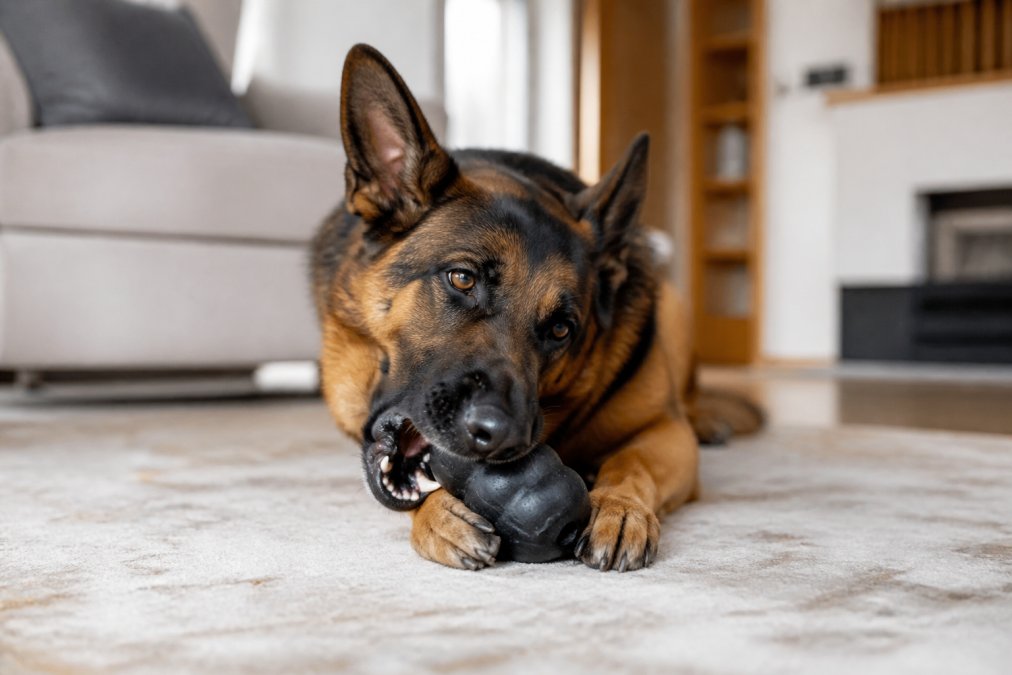
KONG Extreme Black toys use thicker, more durable rubber than the Classic line. Nylabone Power Chew toys are specifically engineered for power chewers. Match toy durability to your dog's chewing intensity to prevent rapid destruction and wasted money.
Toy Rotation Strategies for Long-Term Engagement
Dogs habituate to toys, so strategic rotation maintains novelty and extends the lifespan of your toy collection. Implement a four-week rotation cycle by dividing toys into four groups and introducing one group per week. After four weeks, the first group feels novel again.
Pair rotation with seasonal variation. Introduce cooling toys during summer and warming enrichment during winter. Store rotated toys where your dog can't see them to maintain the surprise element.
Interactive Play for Senior Dogs
Senior dogs need enrichment adapted to their physical limitations. Pain, reduced mobility, and sensory decline require gentler approaches that maintain mental engagement without physical stress.
Low-impact puzzle toys eliminate jumping and running. Snuffle mats, treat-dispensing toys, and scent work games engage minds while keeping joints protected. Shorter, frequent enrichment sessions work better than extended play. A 5-minute puzzle toy session followed by rest is more appropriate than 30-minute play sessions.
Keeping your dog mentally stimulated transforms their behavior and emotional well-being. The best interactive dog toys for enrichment address natural instincts while preventing the destructive behaviors that emerge from boredom. Pet-MALL offers a curated selection of premium enrichment toys designed to meet every dog's needs, from gentle seniors to aggressive chewers. With next-day delivery and free shipping, starting your dog's enrichment journey has never been easier. Choose toys that match your dog's personality, rotate them strategically, and watch your dog's behavior transform within weeks.
Frequently Asked Questions
What are the benefits of mental stimulation for dogs?
Mental stimulation reduces boredom, anxiety, and destructive behavior. Interactive dog toys encourage problem-solving, engage natural foraging instincts, and tire dogs mentally, which often leads to calmer behavior. Dogs that receive adequate cognitive enrichment show improved focus, fewer behavioral issues, and better overall well-being. Mental exercise can be as important as physical exercise for your dog's health.
How do I choose the best interactive dog toy for my dog?
Consider your dog's age, size, chewing style, and energy level. Aggressive chewers need durable rubber toys, while gentle dogs enjoy plush puzzle toys. Treat-dispensing toys suit food-motivated dogs, while snuffle mats work well for dogs who enjoy foraging. Start with difficulty level 1 puzzles if your dog is new to enrichment, then progress to harder levels as they learn.
Are puzzle toys safe for dogs to use unsupervised?
Most interactive dog toys should be supervised initially to ensure your dog doesn't chew through them or choke on small pieces. Durable toys like KONG Classics are safer for unsupervised play, while plush toys and lick mats require monitoring. Always check toys for damage before use and remove any toy showing signs of wear. Choose toys appropriate for your dog's chewing strength.
How long should my dog play with interactive toys daily?
Most dogs benefit from 15-30 minutes of interactive play per day, though this varies by age and energy level. Senior dogs may do better with shorter, gentler sessions. Rotate toys every few days to maintain novelty and prevent boredom. Mental stimulation games combined with physical exercise create the best enrichment routine.
What's the difference between DIY and store-bought enrichment toys?
Store-bought toys offer consistent durability, safety testing, and design expertise, though they cost more upfront. DIY options like frozen peanut butter in a sock or hidden treats in a towel are budget-friendly and customizable but may not last as long or provide the same level of engagement. Many owners use both approaches, rotating between them for variety and cost management.
This article was written using GrandRanker
Shop General Pet Care & Behavior: Browse our General Pet Care & Behavior collection for products picked to match what you just read.