


Durable Cat Scratchers for Kittens: Top Picks & Buying Guide
Table of Contents
- Why Durable Cat Scratchers Matter for Kittens
- Sisal vs Cardboard Cat Scratchers: Which Material Wins?
- Top Durable Cat Scratchers for Kittens
- Cat Scratching Post Height Requirements for Growing Kittens
- How to Train a Kitten to Use a Scratching Post
- Placement Tips for Maximum Enrichment and Furniture Protection
- Maintenance and Longevity: Getting the Most From Your Scratcher
- Signs of a Low-Quality Scratcher to Avoid
Last Updated: August 7, 2026
Why Durable Cat Scratchers Matter for Kittens
Kittens scratch to maintain claws, mark territory, stretch muscles, and manage stress. A durable cat scratcher protects your furniture while giving them an appropriate outlet. Cheap scratchers fall apart within months, wasting money and leaving kittens without proper enrichment. Quality posts can last years instead of weeks, save your couch, and keep kittens mentally engaged. The difference comes down to material durability, structural stability, and understanding what appeals to young cats.
Kittens have different needs than adult cats. They're smaller and still developing scratching preferences. A scratcher that works for a 2-pound kitten may not suit a 10-pound juvenile. Height, material texture, and base stability all matter differently at each growth stage. Below, we'll show you how to choose durable cat scratchers for kittens, compare materials that hold up, and help you avoid scratchers that fail in weeks.
Sisal vs Cardboard Cat Scratchers: Which Material Wins?
The choice between sisal and cardboard determines durability more than any other factor.
Sisal rope is woven from agave plant fiber, creating a textured surface kittens find irresistible. Natural sisal withstands aggressive scratching far longer than cardboard because fibers are tightly wound and don't compress easily. A sisal post can withstand months of heavy kitten scratching without significant wear, and it sheds less mess than cardboard. For kittens that will grow into active adult cats, sisal pays for itself over time.
Corrugated cardboard is affordable, lightweight, and recyclable. Many cardboard scratchers are reversible, doubling their lifespan. High-density corrugated cardboard performs better than standard cardboard because layers are compressed more tightly. The downside is clear: cardboard degrades faster under kitten claws, creating dust and flakes, and typically lasts 2-4 months with regular use. For budget-conscious owners or supplementary scratchers, cardboard works. For primary scratching surfaces, sisal rope wins on durability and longevity.
Top Durable Cat Scratchers for Kittens
Hepper Hi-Lo Cat Scratcher: Adjustable Cardboard Design
The Hepper Hi-Lo solves a problem most scratchers ignore: kittens' changing preferences as they grow. This adjustable cardboard scratcher moves between three positions, high, low, and inclined, keeping cats engaged and extending the scratcher's effective lifespan.
The construction uses dense B-flute corrugated cardboard paired with a solid birch plywood frame and non-toxic gloss coating. The plywood base provides genuine stability, unlike flimsy cardboard-only designs. Replacement cardboard pads are available separately, transforming this into a long-term investment. The modern aesthetic looks intentional in your home rather than like hidden pet furniture.
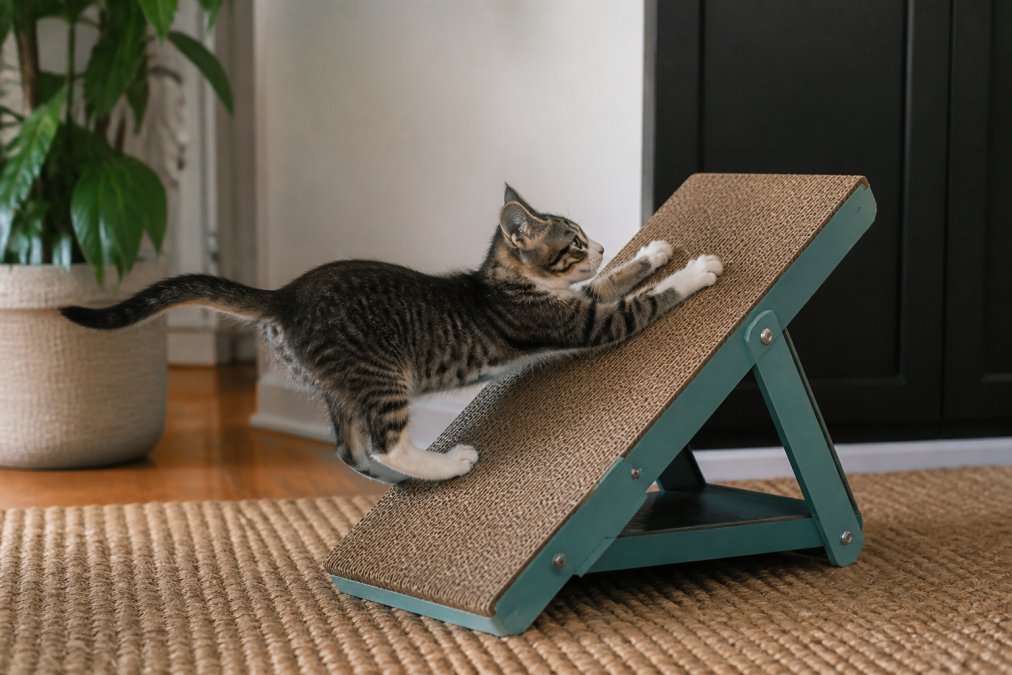
Best for: Cat owners seeking a stylish, durable scratcher that adapts to their kitten's changing preferences.
Pros:
- Multiple positions prevent boredom and extend usable lifespan
- Replacement pads available, making it eco-friendly long-term
- Solid plywood frame ensures stability
- Modern design fits contemporary interiors
Cons:
- Higher initial cost than basic cardboard scratchers
- May not be as sturdy in the fully upright position for very active kittens
- Requires assembly
SmartCat Ultimate Scratching Post: Tall Sisal Option
If your kitten will become an active adult cat, the SmartCat Ultimate Scratching Post is an investment that pays dividends. At 32 inches tall, it accommodates vertical stretching from kitten through adulthood. The natural sisal rope wrapping is tightly wound, resisting fraying even under aggressive kitten claws. The 16x16 inch base prevents wobbling, critical when a kitten launches itself at a post with full force.
Best for: Kittens that will grow into active adult cats, and owners prioritizing stability and long-term durability.
Pros:
- Exceptional stability with oversized base
- Sisal rope lasts years, not months
- Tall height promotes full-body stretching
- Durable construction withstands vigorous scratching
Cons:
- May be too tall for very small kittens initially
- Higher cost than cardboard alternatives
- Takes up more floor space
PetFusion Ultimate Cat Scratcher Lounge: Multi-Cat Ready
The PetFusion lounge solves a dual-purpose problem: it's both a scratching surface and a comfortable lounging bed. At 34x10.5x10.5 inches, it accommodates multiple kittens or larger felines. The reversible corrugated cardboard design means you get two usable surfaces before replacement, effectively doubling its lifespan. Made from recycled corrugated cardboard with non-toxic corn starch glue, it's durable enough for multi-kitten households.
Best for: Multi-kitten households, larger kittens, and owners wanting a scratcher that doubles as furniture.
Pros:
- Ultra-dense recycled cardboard outlasts standard cardboard
- Reversible design extends lifespan significantly
- Multi-functional as scratcher and bed
- Accommodates multiple cats
Cons:
- Bulky design requires floor space
- Higher price point than basic scratchers
- Integrated catnip may lose appeal over time
KONG Naturals Incline Scratcher: Budget-Friendly Choice
For kitten owners on a tight budget, the KONG Naturals Incline Scratcher delivers surprising durability for the price. It converts from flat to inclined position, offering variety that keeps kittens engaged longer. The reversible scratching surface doubles the usable life, and the honeycomb cardboard mimics natural bark texture. Made in the USA from renewable and recyclable materials, it includes KONG Premium North American Catnip.
Best for: Budget-conscious owners, kittens, and households using multiple scratchers in different rooms.
Pros:
- Very affordable and widely available
- Versatile flat and incline positions
- Environmentally friendly with recyclable materials
- Catnip included
- Made in the USA
Cons:
- Cardboard construction requires more frequent replacement
- Lightweight design means less stability
- May fall apart quickly with aggressive scratchers
Go Pet Club Cat Tree F2040: Multi-Level Climber
The Go Pet Club F2040 is a full cat tree with ten sisal-wrapped posts, two condos, and multiple perches. At 72 inches tall, it provides vertical scratching, climbing, and hiding all in one structure. The natural sisal rope on every post appeals to scratching instincts across multiple surfaces, and the large base board prevents wobbling even when multiple kittens use it simultaneously.
Best for: Multi-kitten households, active kittens needing extensive enrichment, and owners with floor space for a substantial cat tree.
Pros:
- Extensive sisal scratching surfaces across ten posts
- Multiple climbing and lounging levels
- Highly durable sisal construction
- Suitable for multiple cats
- Excellent for environmental enrichment
Cons:
- Large footprint requires significant floor space
- Faux fur covering may deteriorate faster than sisal
- Higher cost
- Assembly required
Cat Scratching Post Height Requirements for Growing Kittens
Height requirements change as kittens grow. For kittens under 6 weeks, a low horizontal scratcher or 12-15 inch post is appropriate. From 6 weeks to 4 months, a 24-30 inch post becomes suitable. From 4 months onward, a 32-36 inch post allows full vertical stretch.
The practical approach: choose a post taller than your kitten needs now, understanding they'll grow into it. A 32-inch sisal post works for kittens as small as 4-5 pounds and remains appropriate throughout adulthood.
How to Train a Kitten to Use a Scratching Post
Most kittens will naturally use a scratching post if it's positioned correctly and appeals to their preferences.
Place the scratcher near where the kitten spends time. Kittens don't walk across the house to scratch. Put it in the living room, bedroom, or wherever your kitten hangs out. Multiple scratchers in different rooms increases the odds that one is always nearby.
Use catnip or attractants strategically. Rub catnip on the scratcher, especially on sisal rope. Reapply catnip every few days to maintain interest. Silvervine is an alternative that appeals to some cats that don't respond to catnip.
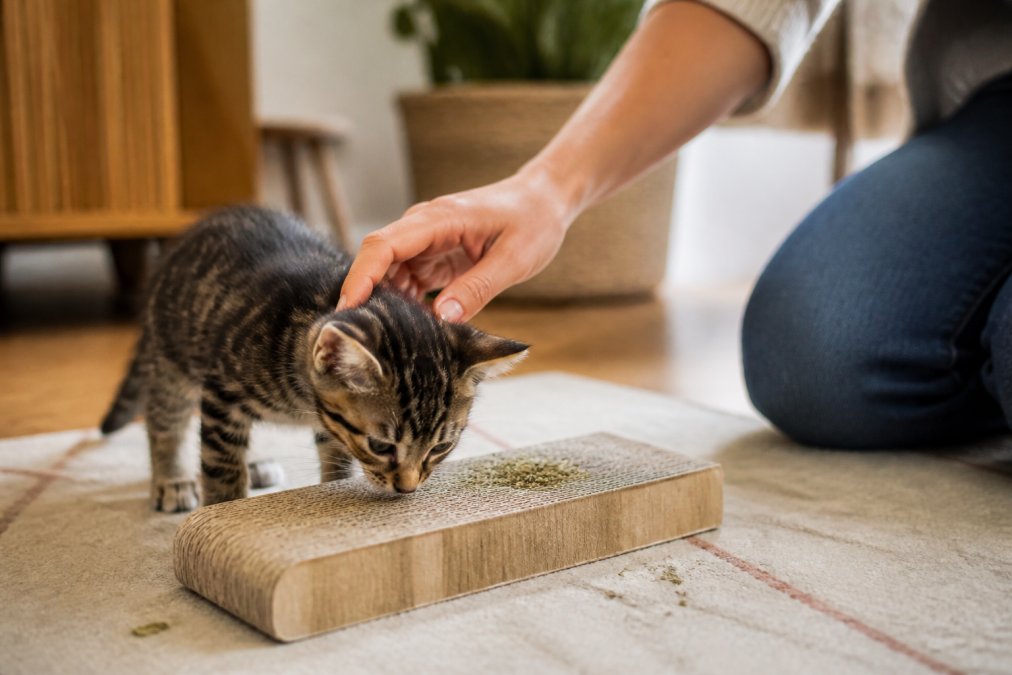
Redirect scratching behavior immediately. When you catch your kitten scratching furniture, calmly move them to the scratcher. Don't yell or punish. Gently place them at the post, let them scratch, and reward with praise.
Reward and praise when they use it. Positive reinforcement works. When your kitten scratches the post unprompted, praise them enthusiastically. Some owners use treats as rewards.
Avoid punishment. Spraying water or yelling teaches them to fear you, not to avoid scratching. Redirection and reward work faster and preserve your relationship with your kitten.
Be patient. Most kittens catch on within days. Some take weeks. Consistency matters more than speed.
Placement Tips for Maximum Enrichment and Furniture Protection
Strategic placement accomplishes two goals: it protects your furniture and enriches your kitten's environment.
Place scratchers near furniture you want to protect. If your kitten gravitates toward your couch, position a scratcher directly next to it. A scratching post next to the couch competes with the couch for attention, and most kittens will choose the dedicated scratcher if it's more appealing and equally accessible.
Use multiple scratchers in high-traffic areas. Kittens that move between rooms need scratchers in each space to prevent furniture damage across your home.
Position vertical scratchers away from walls. Kittens like to see their surroundings while scratching. A post in the corner feels isolating. Place it in open space where the kitten can scratch and still observe the room.
Angle inclined scratchers toward activity centers. Inclined and horizontal scratchers work best when angled toward where kittens play.
Avoid placing scratchers near litter boxes. Kittens don't like scratching near their bathroom. Keep scratchers away from litter areas to maximize appeal and use.
Rotate scratcher positions occasionally. After a few weeks, moving a scratcher to a new location renews interest and prevents it from becoming invisible background furniture.
Maintenance and Longevity: Getting the Most From Your Scratcher
A durable scratcher lasts longer when maintained properly.
For sisal rope posts: Inspect the rope regularly for fraying or loose fibers. Minor fraying is normal. If the rope becomes significantly damaged, some manufacturers sell replacement rope wrapping. Vacuum around the base to manage shed fibers.
For cardboard scratchers: Vacuum regularly to manage cardboard dust and flakes. When one side becomes heavily worn, flip it if the scratcher is reversible. For non-reversible scratchers, replacement is the only option.
For hybrid designs with multiple materials: Clean faux fur covering with a lint roller. Inspect wooden bases for splinters or damage. Tighten any bolts or connectors that loosen over time.
Watch for stability issues. A scratcher that wobbles or feels unsteady discourages use and poses a tipping risk. Check the base regularly. If it's damaged or unstable, repair or replace it.
A quality sisal post lasts 2-3 years or longer with regular use. High-density cardboard scratchers last 4-8 months. Standard cardboard lasts 2-4 months.
Signs of a Low-Quality Scratcher to Avoid
Recognizing low-quality designs saves money and frustration.
Flimsy bases that wobble. A scratcher should feel rock-solid when a kitten jumps on it. If the base shifts or tips easily, it's poorly designed and poses a safety risk.
Thin, loosely wound sisal rope. Quality sisal is tightly wound and dense. Loosely wound rope unravels quickly under kitten claws. Check the rope thickness; it should feel substantial and compact.
Low-quality cardboard that's thin or flimsy. Standard single-wall cardboard falls apart in weeks. Look for corrugated or multi-ply cardboard that feels substantial.
Glues or finishes that smell chemical. Quality scratchers use non-toxic, food-grade adhesives. If a scratcher has a strong chemical smell, it's using low-quality glues or has off-gassing issues.
No replacement parts available. A scratcher that can't be repaired or have worn surfaces replaced is disposable by design. Quality manufacturers sell replacement pads or rope wrapping.
Overly heavy construction that's difficult to move. A scratcher should be stable but not so heavy that repositioning requires two people.
Scratchers that attract no interest. Sometimes a kitten simply won't use a particular scratcher. If your kitten ignores it despite catnip and placement adjustments, the texture or design doesn't appeal.
Choosing durable cat scratchers for kittens means understanding materials, growth stages, and placement strategy. A quality sisal post or high-density cardboard scratcher protects your furniture while keeping your kitten mentally engaged and physically healthy. Pet-MALL offers a curated selection of premium cat furniture designed for durability and kitten safety. Shop with confidence knowing your kitten deserves scratching surfaces that last and appeal to their natural instincts. Next-day delivery on orders placed by 12 PM means your kitten gets the right scratcher quickly, and our 15% first-order discount makes premium quality accessible.
Frequently Asked Questions
What is the best scratcher for kittens?
The best durable cat scratchers for kittens balance stability, height, and material appeal. Sisal rope posts work well for vertical scratchers (like the SmartCat Ultimate at 32 inches), while reversible cardboard options (such as the Hepper Hi-Lo) adapt as kittens grow. For multi-cat homes, larger options like the PetFusion lounge or Go Pet Club tree provide multiple scratching angles and heights to match your kitten's natural instincts.
Are cat scratchers good for kittens?
Yes. Scratchers are essential for kittens because they satisfy natural scratching instincts, maintain claw health, mark territory, and redirect destructive energy away from furniture. Early exposure teaches kittens where scratching is acceptable, building good behavioral habits. Durable scratchers that match your kitten's preferences (vertical, horizontal, or inclined) encourage consistent use and prevent behavioral problems as they mature.
Which cat scratchers last the longest?
Sisal rope posts and high-density reversible cardboard scratchers offer the longest lifespan. The SmartCat Ultimate Scratching Post with its sturdy sisal rope and 16x16-inch base resists wear from vigorous kittens. The Hepper Hi-Lo's replaceable pads and adjustable positions extend its life. For cardboard, the Mochy and PetFusion models use denser corrugated material and reversible designs that outlast basic flat scratchers by months or years.
What is the most durable material for cat scratching posts?
Natural sisal rope is the most durable scratching material, offering superior resistance to aggressive clawing and lasting years with proper care. High-density corrugated cardboard comes second, especially when reversible and made with recycled materials like the PetFusion lounge. Avoid thin cardboard and low-quality materials that shred quickly. Sisal appeals to most cats' natural instincts and withstands heavy scratching better than cardboard alternatives.
At what age should a kitten start using a scratching post?
Kittens can begin learning to use scratching posts as early as 8-12 weeks old. Start with low-height or horizontal options like cardboard scratchers or low-profile lounges, then introduce taller posts as they grow. By 6 months, most kittens are ready for full-height sisal posts (24-32 inches). Early introduction to scratchers establishes positive habits and prevents furniture damage as their claws strengthen and scratching behavior intensifies.
This article was written using GrandRanker
Shop General Pet Care & Behavior: Browse our General Pet Care & Behavior collection for products picked to match what you just read.