


Harness vs Collar for Puppies: Which Is Right?
Table of Contents
- Harness vs Collar for Puppies: Quick Comparison
- Safety and Health Benefits of Harnesses
- When Collars Make Sense for Puppies
- How to Measure a Puppy for a Harness
- Best Puppy Harness for Leash Training
- When to Switch from Collar to Harness
- Making Your Final Choice
Last Updated: August 26, 2026
Harness vs Collar for Puppies: Quick Comparison
Choosing between a harness vs collar for puppies is one of the first decisions new pet owners face, and it matters more than most realize. The wrong choice can lead to tracheal pressure, escape attempts, or poor leash training habits that take months to break. The core difference is simple: collars apply pressure directly to the neck, while harnesses distribute force across the chest and body. That single distinction changes everything about safety, control, and your puppy's long-term relationship with walks.
Here's what you need to know to make the right call for your puppy.
| Feature | Harness | Collar |
|---|---|---|
| Tracheal Pressure | Minimal | High risk if pulling |
| Control for Pullers | Excellent | Limited |
| Escape Risk | Low | Moderate to high |
| Training Ease | Excellent for leash training | Slower for strong pullers |
| Comfort for Small Breeds | Superior | Can cause choking risk |
| ID Tag Attachment | Yes (with D-ring) | Primary purpose |
| Best Age to Start | 8 weeks onward | 6+ months (secondary use) |
Safety and Health Benefits of Harnesses
A harness eliminates the single biggest risk factor in puppy walking: direct neck pressure. When a puppy pulls on a collar, the leash applies force directly to the trachea, larynx, and cervical spine. Over time, this can contribute to tracheal collapse, a condition where the windpipe weakens and narrows (peer-reviewed research). Small breeds and toy breeds are especially vulnerable, but any puppy can develop problems if the collar is too tight or if pulling goes unchecked (aaha.org).
Harnesses work differently. They wrap around the chest and body, spreading force across a much larger surface area. This design prevents the choking sensation many puppies experience with collars and eliminates the risk of neck strain during leash work.
Beyond safety, harnesses improve your puppy's comfort during walks. A puppy that isn't choking or experiencing neck discomfort is more likely to focus on leash training rather than fighting the restraint. This creates a positive association with walks, something that pays dividends for years.
Front-clip harnesses offer an additional benefit: they gently redirect a pulling puppy's momentum toward your side rather than allowing forward lunging. This makes the harness itself a training tool, not just a safety device. As your puppy learns that pulling doesn't work, pulling behavior naturally decreases without requiring constant correction.
Harnesses also prevent escape. A determined puppy can slip out of a collar, especially if it's not fitted perfectly (aafco.org). A properly fitted harness has multiple attachment points and buckles, making escape nearly impossible. For puppies that are escape artists or have high prey drive, this difference is significant.
When Collars Make Sense for Puppies
Collars aren't wrong for puppies, they're just limited in their purpose. The best use case for a collar on a young puppy is ID and microchip attachment, not leash control.
A collar serves as the primary way your puppy carries identification tags. If your puppy gets loose, a collar with clear ID tags dramatically increases the chance of recovery. Microchips are also standard practice, and while they don't require a collar, a collar makes your puppy immediately identifiable to anyone who finds them.
Some owners use a collar as a secondary safety layer, keeping it on at home or during car rides while using a harness for walks. This approach combines the ID benefit of a collar with the safety of a harness during active movement.
Collars can work for puppies that don't pull and have been trained from an early age to walk calmly on leash. If your puppy is naturally calm, smaller than 15 pounds, and responds well to gentle leash guidance, a collar may be sufficient. However, this is rare in puppies. Most puppies pull, lunge, and test boundaries during walks, making a harness the safer default.
The reality is that collars work best as a secondary tool, for ID and identification, not as your primary leash management device. If you're going to use a collar, pair it with a harness during walks.
How to Measure a Puppy for a Harness
Getting the fit right is the difference between a harness that works and one your puppy can slip out of or that causes discomfort. Measuring your puppy correctly takes five minutes and prevents weeks of frustration.
You'll need a soft measuring tape (the kind tailors use, not a rigid ruler). If you don't have one, a piece of string and a ruler work in a pinch.
Step 1: Measure the chest. This is the most critical measurement. Place the tape around the widest part of your puppy's chest, just behind the front legs. The tape should be snug but not tight, you should be able to slip one finger underneath. Note this measurement.
Step 2: Measure the neck. Place the tape around the base of your puppy's neck where a collar would sit. Again, keep it snug but not tight. One finger should fit underneath.
Step 3: Measure the length. For harnesses that wrap around the body, measure from the base of the neck to the base of the tail. This helps determine which size harness will sit properly on your puppy's frame.
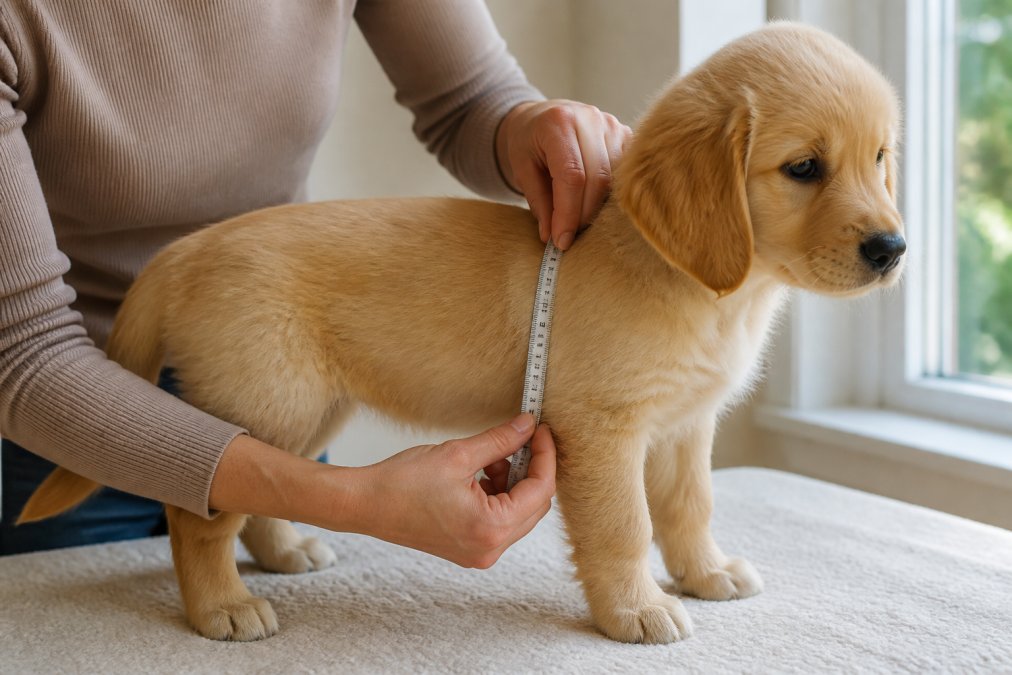
Step 4: Compare to sizing charts. Every harness brand sizes differently. Use the measurements you've taken to find the correct size according to that specific brand's chart. Don't assume "small" or "medium" matches your puppy's actual size.
Step 5: Order slightly larger if between sizes. Puppies grow fast. If your measurements fall between two sizes, order the larger one. You can adjust the straps as your puppy grows, and a slightly loose harness is safer than one that's too tight.
After your harness arrives, put it on your puppy and check the fit. You should be able to slip two fingers under any strap. If you can fit more than two fingers, it's too loose. If you can't fit two fingers, it's too tight.
Best Puppy Harness for Leash Training
The Blue-9 Balance Harness stands out as a top choice for puppies learning leash manners. It offers six-point adjustment for a secure fit, multiple leash attachment points (front and back), and a buckle on the neck loop for puppies that dislike harnesses going over their head. The soft-touch nylon with reflective stitching means your puppy stays visible during low-light walks, and the design was created specifically for training purposes rather than just containment.
The PetSafe Easy Walk Harness is an excellent alternative if your puppy is already showing pulling behavior. Its front-clip design gently redirects a pulling puppy's momentum toward your side, which teaches them that pulling doesn't work.
For smaller puppies or those who need maximum comfort, the Puppia Soft Harness offers lightweight, breathable mesh construction. It's gentle on delicate puppy skin and easy to put on and take off, though it's primarily a back-clip design, which means it won't help with pulling as much as a front-clip harness would.
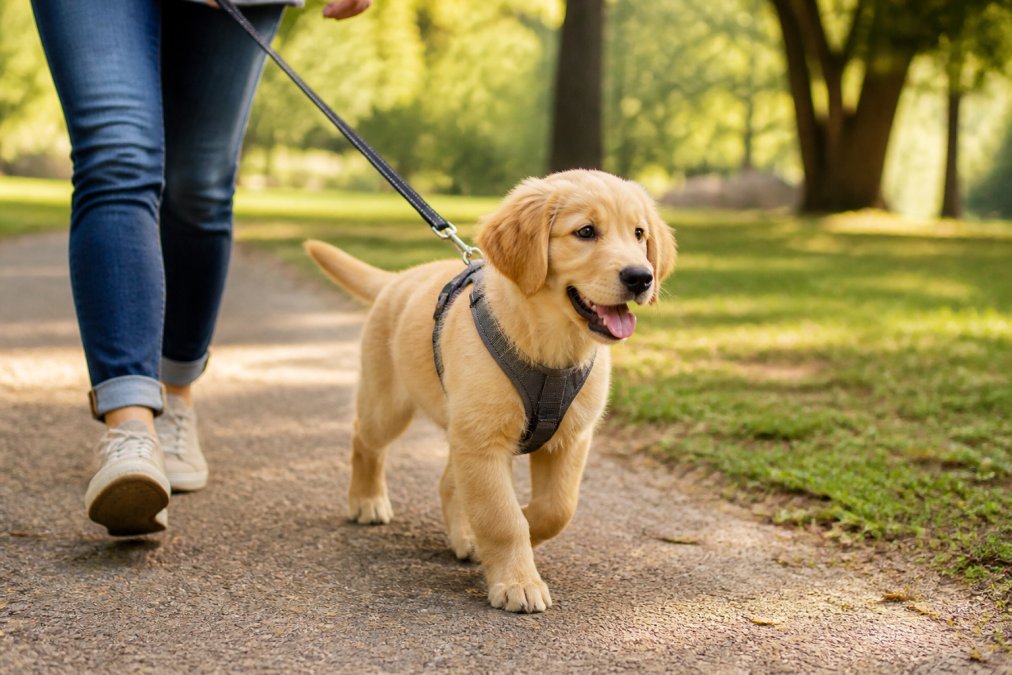
Pet-MALL carries a curated selection of quality harnesses, along with sizing guides to ensure you get the right fit for your puppy's current measurements. The advantage of shopping through Pet-MALL is access to next-day delivery for orders placed by 12 PM, which matters when your puppy outgrows a harness and you need a replacement quickly.
The key difference between these three options comes down to your puppy's specific needs. If your puppy pulls aggressively, the PetSafe Easy Walk's front-clip design is worth considering. If your puppy is smaller or particularly sensitive, the Puppia's soft mesh is gentler. If you want maximum adjustability and professional-grade training design, the Blue-9 is a strong choice.
When to Switch from Collar to Harness
Most puppies should transition to a harness from day one. There's no real "switch" needed, start with a harness for walks and use a collar only for ID attachment at home or in the car.
However, if you've started with a collar and your puppy is now showing pulling behavior, escape attempts, or signs of neck strain (coughing, gagging, or reluctance to walk), it's time to switch immediately. Waiting to see if the behavior improves on its own usually makes things worse. A puppy that's been pulling on a collar for weeks develops stronger pulling habits and may have already experienced tracheal pressure.
The transition is simple. Get the properly fitted harness, introduce it to your puppy in a positive way (let them wear it around the house for short periods while offering treats), and then use it exclusively for walks. Most puppies adjust within 2-3 days.
If your puppy has been trained on a collar and responds well to leash commands, you can keep using the collar for calm walks around your neighborhood. But for any situation where pulling is likely, busy streets, parks, or encounters with other dogs, switch to a harness. As your puppy matures and demonstrates reliable leash manners, you have more flexibility with a collar. But during the critical puppy months (8 weeks to 6 months), a harness is the safer default.
Making Your Final Choice
The decision between a harness vs collar for puppies comes down to one principle: prioritize your puppy's safety and comfort during the critical early months. A harness eliminates tracheal pressure, prevents escape, and actually helps with leash training. A collar serves a purpose, carrying ID, but shouldn't be your primary leash management tool.
Here's the practical recommendation: use a harness for all walks and outdoor time. Keep a collar on your puppy at home with ID tags attached, or use a collar strictly for identification purposes. This approach covers all the bases, your puppy gets the safety and training benefits of a harness while maintaining the ID protection of a collar.
When choosing a specific harness, measure your puppy accurately, consider whether pulling is already an issue (which favors a front-clip design), and plan to remeasure every 4-6 weeks as your puppy grows. Pet-MALL's curated selection makes it easy to find quality harnesses backed by next-day delivery and a 15% discount on your first order, so you can make the switch quickly if you need to.
Your puppy's first few months set the tone for their entire life of walks. Getting the gear right, starting with the right harness, makes those months safer, more enjoyable, and more successful for both of you.
Frequently Asked Questions
Should puppies wear collars or harnesses?
Harnesses are generally recommended for puppies because they distribute force across the chest and back rather than concentrating pressure on the neck. This reduces risk of tracheal damage and neck strain. Collars can be used for ID tags and identification, but a harness provides better control during leash training and protects your puppy's cervical spine during the critical early growth stages.
How do I measure a puppy for a harness?
Measure your puppy's chest girth by wrapping a soft measuring tape snugly around the widest part of the chest, just behind the front legs. Note this measurement and compare it to the harness size chart. Also measure the neck if the harness has a neck loop. Puppies grow quickly, so check fit every 2-3 weeks and size up as needed to ensure the harness remains comfortable and effective.
At what age should you put a harness on a puppy?
You can introduce a harness to a puppy as early as 6-8 weeks old, though many owners wait until 8-12 weeks when puppies are more coordinated. Start with short indoor sessions to help your puppy adjust to wearing it. Proper introduction using positive reinforcement makes the transition smoother and helps your puppy develop good leash walking habits from the start.
Can a collar cause tracheal damage in small puppies?
Yes, collars can put excessive pressure on a puppy's trachea, especially during pulling or if the collar is too tight. Small breeds and puppies with delicate necks are particularly vulnerable to tracheal collapse from repeated neck strain. A harness distributes force more evenly across the body, significantly reducing this risk and protecting your puppy's airway during walks and play.
Starting your puppy off with the right gear is one of the easiest ways to prevent behavioral and health problems down the road. Pet-MALL's curated selection of premium harnesses and collars takes the guesswork out of choosing, with expert guidance, fast shipping, and quality you can trust. Get started with Pet-MALL and set your puppy up for a lifetime of happy, safe walks.
This article was written using GrandRanker