


How to Organize Pet Supplies: A Step-by-Step Guide
Table of Contents
- Assess Your Current Pet Supply Inventory
- Sort, Declutter, and Donate Unused Items
- Pet Supply Storage Ideas for Every Space
- Small Space Pet Organization Solutions
- Best Pet Toy Organizers and Containment Systems
- Create a Dedicated Pet Hub or Station
- Label, Maintain, and Keep Your System Tidy
Last Updated: August 11, 2026
Assess Your Current Pet Supply Inventory
The first step to organizing pet supplies is understanding what you actually have. Most pet owners accumulate items over time without realizing how much inventory they've built up, toys get forgotten in closets, treats expire in cabinets, and duplicate items hide in different rooms.
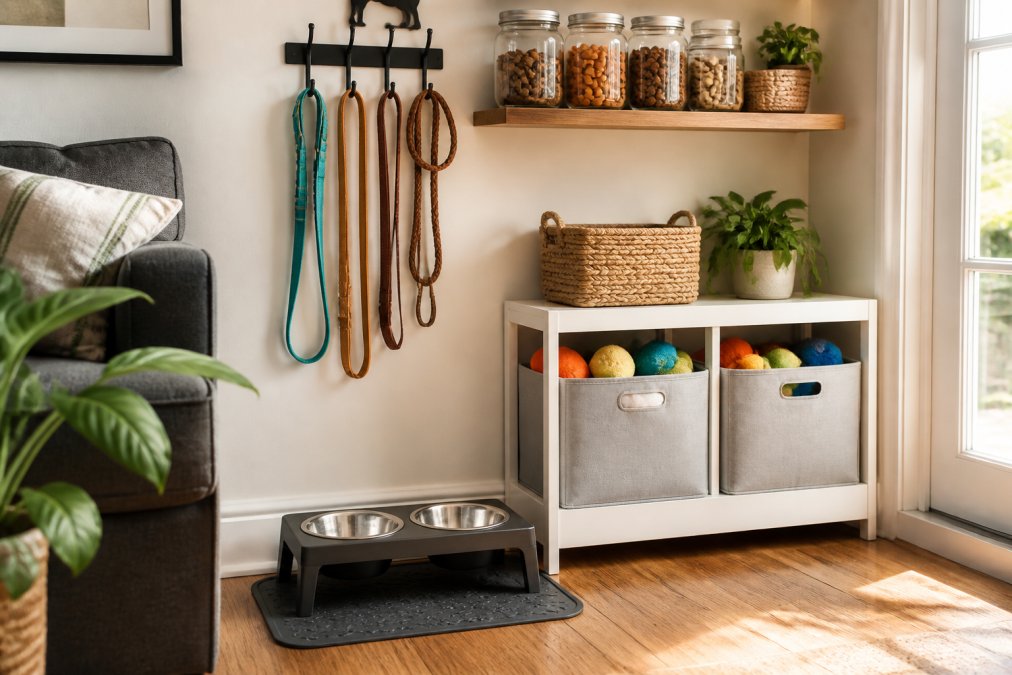
Start by gathering everything in one place. Pull out all pet-related items from every corner of your home: closets, under beds, garage shelves, bathroom cabinets, and kitchen drawers. As you gather items, categorize them into these broad groups:
- Toys and enrichment items
- Food and treats
- Feeding equipment and bowls
- Grooming supplies and health items
- Collars, leashes, and walking gear
- Travel and outdoor equipment
- Cleaning supplies for pet areas
- Health records and documentation
This categorization reveals where your pet supplies are concentrated and which areas need dedicated storage. Document what you find by taking photos or making a simple list. This baseline helps you measure success and prevents duplicate purchases when shopping at Pet-MALL or other retailers.
Sort, Declutter, and Donate Unused Items
Once everything is visible, create three sorting piles: keep, donate, and discard. Be realistic about what your pet actually uses. If your dog hasn't touched a toy in six months, it's taking up space that could hold something they actually play with.
Check treat expiration dates, medication dates, and supplement dates immediately. Old items aren't just clutter, they pose health risks. Evaluate duplicate items carefully. If you have three food bowls but only one pet, keep one or two at most. Duplicates make sense for multi-pet households or travel backups, but excess quantities just create clutter.
For items in the donate pile, contact local animal shelters, rescue organizations, or pet food banks. Many facilities gladly accept gently used toys, carriers, and supplies. This decluttering phase typically reduces pet supply volume by 30-40% in most households, leaving you with items that serve a real purpose.
Pet Supply Storage Ideas for Every Space
Effective storage solutions depend on your available space and your pet's specific needs. Consider vertical storage first, wall-mounted shelves above your pet's eating area hold treat containers and food storage bins without consuming floor space. Pegboards work well for organizing leashes, harnesses, and smaller accessories.
Transparent storage bins let you see contents at a glance. Label each bin clearly so household members know where to find items. For food storage, airtight containers prevent spoilage and pests. Transfer kibble from original bags into sealed containers that stack neatly.
Corner spaces often go unused. A corner shelving unit dedicated to pet supplies creates a compact hub without eating into main living areas. Cabinet organization dividers help sort smaller items within drawers or shelves. Match storage location to frequency of use, if you're frequently grabbing leashes for walks, they need to be accessible.
Small Space Pet Organization Solutions
Apartment dwellers and those with limited square footage need creative approaches. Vertical storage becomes essential, use every inch of wall space from floor to ceiling with floating shelves, wall-mounted organizers, and corner shelving units.
Furniture that serves double duty reduces your footprint. An ottoman with hidden storage holds toys while providing seating. Benches with built-in storage near entryways organize walking gear. Under-stair storage works in homes with basements or lower levels, with sliding drawers tucked underneath.
Door-mounted organizers maximize vertical real estate. Over-the-door shoe organizers hold grooming supplies and medications. Collapsible storage bins compress when empty, taking up minimal room. Wall-mounted treat dispensers and toy holders keep items accessible without dedicated furniture.
For multi-pet households in small spaces, clearly labeled zones keep different pets' items organized. The philosophy is ruthless prioritization: keep only what you use regularly, store items vertically, and use furniture that serves multiple purposes.
Best Pet Toy Organizers and Containment Systems
Toys are often the biggest culprit in pet supply clutter. Toy baskets and bins work well for larger toys, choose baskets with handles for easy carrying. Bean bag toy storage combines containment with functionality, letting pets burrow to find toys.
Wall-mounted toy organizers keep toys visible and accessible. Clear pockets let you see what's available without opening containers. Rolling storage carts with multiple tiers maximize vertical space while remaining mobile.
Divided storage boxes separate toys by type, soft toys in one section, rubber toys in another, puzzle toys in a third. Toy rotation systems work better than having every toy available simultaneously. Store half your toys in a closet, rotating them out every two weeks to keep playtime fresh and reduce clutter.
Create a Dedicated Pet Hub or Station
A dedicated pet hub centralizes supplies and creates a consistent space for your pet's daily routines. Choose a location that works with your home's layout, kitchens are natural hubs since feeding happens there, while mudrooms near exterior doors work well for walking gear.
Your pet hub should include:
- Feeding station with food and water bowls
- Food storage container for kibble and treats
- Leash hooks and collar storage for walking gear
- Small shelf or bin for grooming supplies
- Waste bag dispenser for cleanup
- Health records and medication storage
Elevated feeders reduce strain on your pet's neck during meals. Leash hooks mounted at accessible height let you grab walking gear without searching. Grooming supplies stored in a small cabinet keep everything organized. Label everything clearly so household members know where items belong.
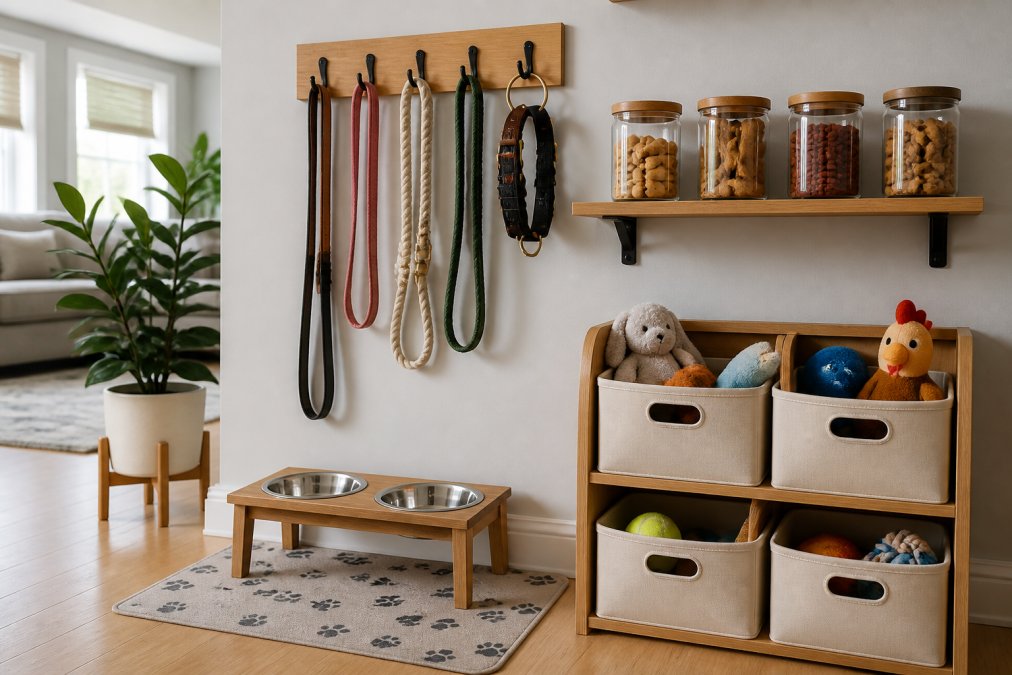
Your pet hub becomes a visual anchor for your home's pet organization system. When everything has a designated place, maintaining order becomes automatic.
Label, Maintain, and Keep Your System Tidy
Use clear, durable labels on every container and shelf. Label makers create professional-looking labels that last through regular handling. Include what's in the container and, when relevant, expiration dates or rotation information.
Color-coding systems help at a glance. Assign one color to each pet if you have multiple animals, or use different colors for supply categories: blue for toys, green for food, red for health items.
Establish a weekly maintenance routine, spend 10-15 minutes each week returning items to their designated places and checking for expired supplies. Create a pet supply inventory list and update it monthly to prevent overbuying and ensure you don't run out of essentials.
Schedule quarterly deep-cleaning sessions to pull everything out, wipe down containers, and reassess your system. Rotate toys and supplies seasonally, storing winter items in summer and bringing them out when needed. Keep a health records folder in your pet hub with vaccination records, medication information, and vet contact details.
The maintenance phase is where most organization systems fail. By building simple routines and clear systems, you maintain your organized space with minimal effort. Your pet benefits from a tidy, accessible environment, and your daily routines become smoother and less stressful.
Organizing pet supplies might seem straightforward, but maintaining that organization long-term is where the real challenge lies. Start with a thorough inventory assessment, be ruthless about decluttering, and invest in storage solutions that match your actual space and lifestyle. Pet-MALL offers premium pet products that integrate seamlessly into organized systems, quality toys, reliable feeders and food containers, and durable travel gear. When you combine intentional organization with quality supplies designed to last, you create a pet-friendly home that works efficiently for everyone. Begin with one area, establish your system, and expand from there.
Frequently Asked Questions
How do you keep pet supplies organized in a small apartment?
In a small space, vertical storage is your best friend. Use wall-mounted shelves, over-the-door organizers, and stackable bins to maximize storage without taking up floor space. Collapsible storage containers save room when not in use, and pressure-mounted gates keep pet gear accessible without permanent installation. Choose multipurpose furniture like ottomans with hidden storage to organize pet supplies while serving other functions.
What is the best way to organize dog toys?
Designate a specific toy basket or bin for easy access and containment. Rotate toys weekly to keep your dog engaged and reduce clutter. Use clear containers so you can see what toys are inside without opening them. For larger collections, divide toys by type, plush toys, chew toys, interactive toys, in separate labeled bins. This system makes cleanup faster and helps you identify toys that need replacing.
Where should I store pet food to keep it fresh and organized?
Store pet food in airtight treat containers or sealed bins away from direct sunlight and moisture. Keep dry kibble in a cool, dry location and label containers with the food type and expiration date. Use a dedicated shelf or cabinet in your kitchen or pantry to create a feeding station. For multiple pets, organize each pet's food separately with clear labeling to prevent mix-ups and ensure you know when supplies are running low.
How do you organize pet grooming supplies?
Gather all grooming tools, brushes, nail clippers, shampoo, towels, in one accessible location. Use a caddy, drawer organizer, or small shelf to keep items sorted by category. Label compartments clearly so family members know where supplies are stored. Keep frequently used items at eye level and store specialized tools separately. Check expiration dates on grooming products regularly and dispose of dried-out shampoos or expired treatments.
This article was written using GrandRanker