


How to Stop Cat Scratching: 7 Proven Methods
Table of Contents
- Why Do Cats Scratch Furniture
- How to Stop Cat Scratching: Choose the Right Scratching Surface
- Strategic Placement and Height Requirements
- How to Train a Cat to Use a Scratching Post
- Best Cat Scratching Deterrents and Furniture Protection
- Cat Nail Trimming Tips for Damage Control
- Common Mistakes to Avoid When Stopping Cat Scratching
- Redirecting Behavior and Environmental Enrichment
Last Updated: August 4, 2026
Why Do Cats Scratch Furniture
Cats scratch furniture to meet fundamental biological and psychological needs, not out of malice. Understanding these root causes is essential for effectively redirecting the behavior. Cat owners who understand WHY their cats scratch make far better progress than those who simply try to punish it.
Territorial Marking and Scent Glands
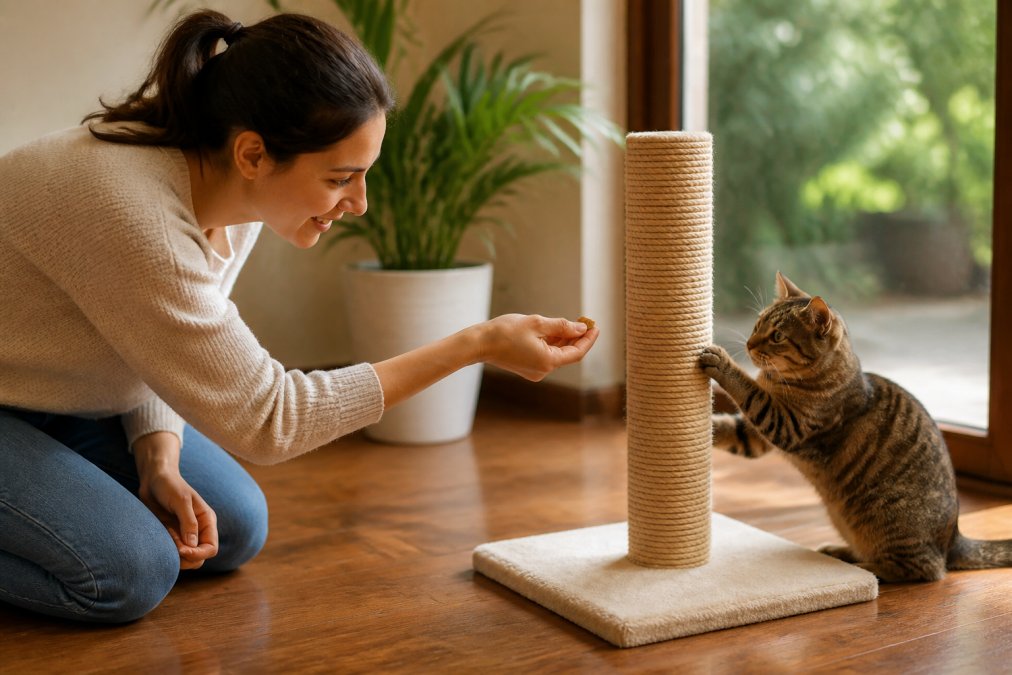
Cats have scent glands on their paws, and scratching is their primary way of marking territory. When a cat scratches furniture, they deposit their scent across visible areas and create visual markers that communicate ownership to other animals and household cats. In multi-cat homes, this territorial marking becomes even more pronounced, with dominant cats reinforcing ownership repeatedly while subordinate cats may develop stress-induced scratching behaviors.
Stress and Boredom as Root Causes
Scratching often signals emotional distress. Environmental changes like moving, introducing a new pet, or rearranging furniture can trigger stress-induced scratching lasting weeks. Boredom is equally significant, indoor cats with insufficient enrichment develop destructive scratching habits as an outlet for pent-up energy. A cat that feels secure, stimulated, and emotionally balanced will scratch far less destructively than one experiencing chronic stress or understimulation.
How to Stop Cat Scratching: Choose the Right Scratching Surface
Stopping cat scratching means redirecting it to appropriate surfaces. The foundation of any successful strategy is providing scratching posts and pads your cat actually wants to use. The surface material matters enormously, as cats have distinct texture preferences.
Vertical vs. Horizontal Scratching Preferences
Cats don't all scratch the same way. Some are "vertical scratchers" who prefer tall posts where they can stretch their entire body while dragging claws downward. Others are "horizontal scratchers" who like flat, low surfaces like corrugated cardboard. Most cats use both types but have a strong preference for one.
Watch your cat's natural scratching behavior. If they scratch high on furniture and walls, they're vertical scratchers. If they scratch low on carpet or rugs, they prefer horizontal surfaces. Providing both types ensures you're meeting their needs.
Sisal Rope, Corrugated Cardboard, and Carpet Materials
Sisal rope is the gold standard for vertical scratching posts. The texture satisfies the scratching instinct and lasts longer than softer materials. Cats love the way their claws grip and drag through sisal fibers.
Corrugated cardboard appeals to horizontal scratchers and budget-conscious owners. Cats find the layered texture deeply satisfying, and the gradual shredding appeals to them. Cardboard scratchers are inexpensive and replaceable.
Carpet-covered posts often backfire. Cats can't distinguish between carpet on a scratching post and carpet on your stairs or bedroom floor, training them to scratch all carpeted areas throughout your home.
DIY vs. Store-Bought Scratching Posts
Store-bought scratching posts offer convenience and variety, integrating better into home décor. DIY scratching posts cost less and offer customization, a simple post wrapped in sisal rope can be made from PVC pipe and a wooden base for a fraction of commercial prices. Quality matters; flimsy posts that wobble or tip over will be rejected by your cat. Pet-MALL offers premium store-bought options that combine durability with aesthetic appeal.
Strategic Placement and Height Requirements
Where you place scratching posts matters as much as what material they're made from. Place posts near the furniture your cat currently targets. If your cat scratches the sofa, put a post next to it. The goal is to make the scratching post more convenient and appealing than the furniture you're protecting.
Height requirements depend on scratching style. Vertical scratchers need posts that allow full-body stretching, typically 30-36 inches tall minimum. Horizontal scratchers need floor-level pads. Stability is non-negotiable, a wobbly post will be abandoned immediately. Invest in posts with wide bases or wall-mounted options that can't tip over.
Multi-Cat Household Dynamics
In multi-cat households, dominant cats claim preferred scratching spots while subordinate cats may develop stress-related scratching. Providing multiple scratching options at different heights, materials, and locations is essential. Spread posts throughout your home so each cat has access without competing. The general rule is one post per cat, plus one extra, to reduce territorial conflicts.
How to Train a Cat to Use a Scratching Post
Once you've selected and placed appropriate scratching surfaces, train your cat to use them through positive reinforcement. Most cats will naturally gravitate toward appealing, conveniently located posts.
Positive Reinforcement and Clicker Training
Positive reinforcement works far better than punishment. When you catch your cat scratching the post, reward them immediately with treats, praise, or play. Clicker training accelerates this process, click when your cat scratches the post and give a treat. The cat learns to associate the clicking sound with the reward.
Timing is critical; the reward must come within one to two seconds of the desired behavior. Never punish a cat for scratching furniture. Punishment creates fear and anxiety, which actually increases stress-induced scratching.
Using Catnip and Pheromone Diffusers
Catnip is a powerful attractant for most cats. Rubbing dried catnip on scratching posts makes them irresistible, though about 30% of cats don't respond. Pheromone diffusers like Feliway release synthetic versions of calming pheromones cats naturally produce, reducing stress and anxiety that drives destructive scratching.
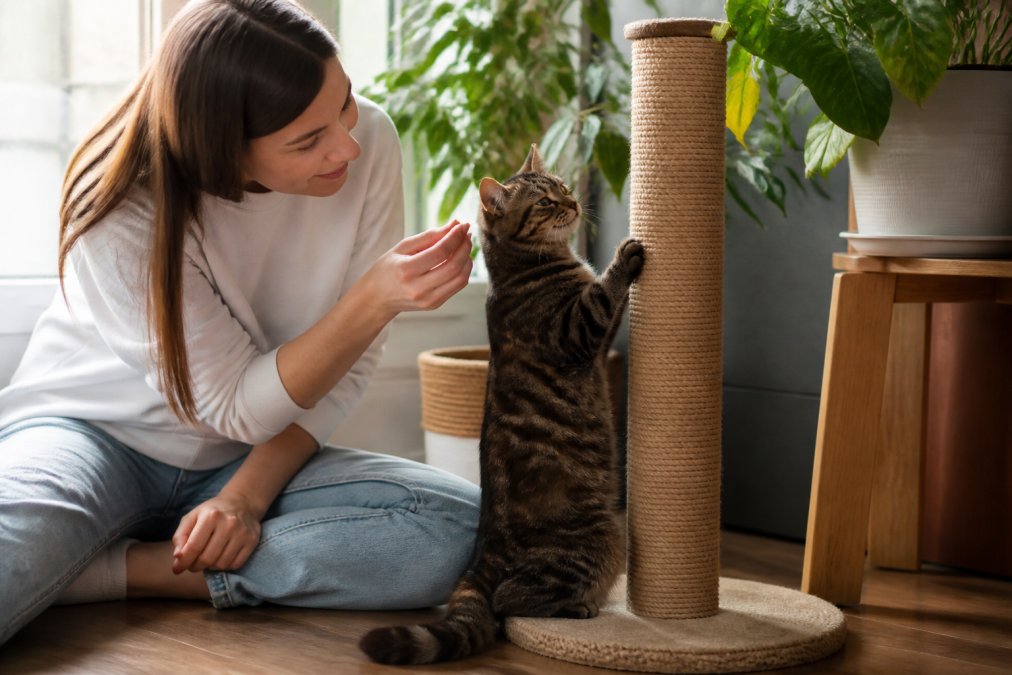
Combining multiple motivators, catnip, pheromones, treats, and praise, creates a compelling reason for your cat to use the post consistently.
Best Cat Scratching Deterrents and Furniture Protection
While redirecting scratching to appropriate surfaces is primary, deterrents and furniture protection create a complete approach by making furniture less appealing to scratch.
Double-Sided Tape and Visual Deterrents
Double-sided tape is one of the most effective humane deterrents. Cats dislike the sticky feeling on their paws and will avoid taped surfaces within one to two weeks. It requires no chemicals and doesn't harm the cat, though it needs regular replacement.
Visual deterrents like aluminum foil work for some cats, though effectiveness varies. Placing foil over scratched areas for a few weeks can redirect behavior while you establish scratching post habits.
Deterrent Sprays and Humane Alternatives
Commercial deterrent sprays like Bitter Apple create an unpleasant taste or smell that cats avoid. Citrus-based sprays are also effective, as most cats dislike citrus scents. Furniture covers provide physical barriers, with clear plastic covers being highly effective though less aesthetically pleasing.
The most effective approach combines deterrents with scratching post training. Deterrents alone won't solve the problem; they buy time while you establish positive scratching habits.
Cat Nail Trimming Tips for Damage Control
Regular nail trimming reduces scratching damage while maintaining nail health. Shorter claws cause less damage to furniture and scratch posts. Most cats need trimming every two to three weeks; indoor cats typically need more frequent trimming than outdoor cats.
Using Nail Clippers and Maintaining Nail Health
Scissor-style clippers are easier to control than guillotine-style clippers. Trim only the sharp tip of the nail, not the pink quick underneath, which contains blood vessels and nerves. Hold your cat's paw gently but firmly and trim at a 45-degree angle, removing only the clear or white portion.
Frequency and Age-Specific Strategies
Kittens need trimming every one to two weeks as their nails grow rapidly. Adult cats typically need trimming every two to three weeks. Senior cats may need more frequent trimming as their nails become brittle. Establishing a regular routine early makes the process easier.
| Age Group | Trimming Frequency | Nail Length | Maintenance Notes |
|---|---|---|---|
| Kittens (0-1 year) | Every 1-2 weeks | Very short | Rapid growth, frequent trimming needed |
| Adult cats (1-7 years) | Every 2-3 weeks | Medium | Regular scratching helps maintenance |
| Senior cats (7+ years) | Every 2-3 weeks or more | Longer | Less activity, nails accumulate faster |
Common Mistakes to Avoid When Stopping Cat Scratching
Understanding what NOT to do is as important as knowing what to do. Never use punishment, yelling, spraying with water, or physical punishment creates fear and stress, causing cats to scratch more. Provide multiple scratching surfaces at different heights and locations, not just one small post. Choose materials your cat prefers; carpet-covered posts teach cats that all carpet is acceptable to scratch. Place posts near furniture your cat currently targets, not in remote corners. Finally, give the process time, redirecting scratching behavior typically takes two to four weeks of consistent effort.
Redirecting Behavior and Environmental Enrichment
The most sustainable solution combines redirecting behavior with environmental enrichment. A cat with adequate stimulation, exercise, and mental engagement will scratch less destructively than a bored cat.
Environmental enrichment includes interactive toys, climbing structures, and window perches. Cat trees and wall-mounted shelves provide climbing opportunities satisfying natural instincts. Window perches allow cats to observe outdoor activity for mental stimulation. Interactive play sessions of 15-20 minutes with wand toys or laser pointers reduce pent-up energy. Puzzle feeders and treat-dispensing toys provide mental engagement through problem-solving.
The combination of appropriate scratching surfaces, positive reinforcement training, environmental enrichment, and regular play creates a comprehensive approach addressing underlying causes, territorial marking, stress, and boredom, rather than just treating symptoms. Cats that feel secure, stimulated, and emotionally balanced naturally reduce destructive scratching and use appropriate surfaces because those surfaces meet their needs better than your furniture.
According to research from the American Veterinary Medical Association, environmental enrichment and appropriate scratching surfaces reduce behavioral problems in indoor cats by addressing underlying psychological needs rather than suppressing natural behaviors.
Pet-MALL understands that successful cat ownership requires meeting your cat's natural instincts while protecting your home. Our curated selection of premium scratching posts, deterrent products, and enrichment toys are specifically chosen to support this balance. We offer sisal rope posts, corrugated cardboard scratchers, and vertical cat trees designed for stability and durability. With next-day delivery for orders placed by 12 PM and a 15% discount on first orders, Pet-MALL makes it easy to implement a complete scratching management strategy. Start building your cat's ideal scratching environment today and transform destructive behavior into healthy, appropriate scratching habits.
Frequently Asked Questions
What's the fastest way to stop cat scratching furniture?
The fastest approach combines three tactics: provide appropriate scratching surfaces (sisal rope or corrugated cardboard posts), use double-sided tape or deterrent spray on furniture, and trim your cat's nails every 2-3 weeks to reduce damage. Redirecting behavior through positive reinforcement with treats or catnip accelerates results within 1-2 weeks for most cats. Environmental enrichment and pheromone diffusers also reduce stress-induced scratching.
How do I train a cat to use a scratching post instead of my couch?
Place the scratching post near furniture your cat targets. Use clicker training: click and reward with treats when your cat scratches the post. Rub catnip on the post to attract interest. For multi-cat households, provide multiple posts to reduce territorial competition. Reward immediately after scratching to create positive association. Most cats respond within 2-3 weeks with consistent positive reinforcement.
Are store-bought scratching posts better than DIY options?
Store-bought posts offer stability, variety in materials (sisal rope, corrugated cardboard, carpet), and tested durability. DIY options cost less but may lack proper height or stability, which are critical for effective scratching. Premium store-bought posts provide better nail health outcomes through proper texture and structure. Choose based on your cat's texture preference and your space constraints; stability matters more than cost.
What should I do about stress-induced scratching in multi-cat homes?
Stress-induced scratching often signals territorial anxiety. Provide one scratching post per cat plus one extra, placed in different areas to reduce competition. Use pheromone diffusers to calm stress responses. Separate feeding and litter areas to minimize conflict. Ensure adequate vertical space (cat trees) for escape routes. If scratching persists, consult a cat behaviorist to address underlying tension between cats.
Stopping destructive scratching requires understanding your cat's natural instincts and meeting those needs through appropriate surfaces and environmental enrichment. Pet-MALL's premium scratching posts, made with durable sisal rope and designed for stability, combined with our behavioral guidance resources, give you everything needed to redirect scratching behavior successfully. Get started with Pet-MALL and see how the right approach transforms your cat's behavior within weeks.
This article was written using GrandRanker