


Premium Dog Beds for Joints: 2026 Guide
Table of Contents
- Why Premium Dog Beds for Joints Matter for Your Senior Pet
- Signs Your Dog Has Joint Pain: When It's Time to Upgrade
- Key Features to Look For in Premium Dog Beds for Joints
- Types of Orthopedic Dog Beds Explained
- Best Dog Beds for Large Dogs With Arthritis
- Dog Joint Supplements and Complementary Support
- Transitioning Your Dog to a New Orthopedic Bed
- Durability, Maintenance, and Long-Term Value
Last Updated: July 29, 2026
When your senior dog struggles to rise from their bed, limps across the room, or whimpers when jumping onto furniture, you're watching the physical toll of joint deterioration. Premium dog beds for joints address this directly by providing the orthopedic support aging and arthritic dogs desperately need. At Pet-MALL, we understand that a quality orthopedic bed isn't a luxury, it's therapeutic furniture that can meaningfully improve your dog's daily comfort and mobility.
The right bed makes a measurable difference. Dogs with joint pain spend more time resting when they have proper support, which reduces stress on deteriorating joints and allows healing to occur during sleep. This guide covers everything you need to know about selecting, transitioning to, and maintaining premium dog beds for joints, so your pet can enjoy their senior years with less pain and greater dignity.
Why Premium Dog Beds for Joints Matter for Your Senior Pet
Your dog's joints deteriorate over time, especially in large breeds predisposed to hip dysplasia and arthritis. When a dog sleeps on a thin mat or hard floor, their weight concentrates on pressure points, hips, elbows, shoulders, and spine, creating inflammation and stiffness that compounds overnight. A premium orthopedic bed distributes weight evenly across high-density foam, reducing pressure on vulnerable joints and allowing muscles to relax completely during sleep.
Sleep quality directly affects joint health. Dogs that rest comfortably heal faster and move better the next day. Poor sleep surfaces trap dogs in a cycle: pain prevents quality rest, inadequate rest worsens inflammation, and worsening inflammation increases pain. Many veterinarians recommend orthopedic bedding as a first intervention before considering medication or supplements for mild to moderate joint issues.
A quality orthopedic bed typically lasts 5-7 years with proper care, providing consistent support through your dog's most vulnerable senior years. Beyond comfort, the right bed can reduce nighttime whimpering, decrease repositioning, and improve your dog's willingness to move during the day, all signs that joint pain is decreasing.
Signs Your Dog Has Joint Pain: When It's Time to Upgrade
Recognizing joint pain early means you can intervene before significant damage occurs. Many dog owners attribute mobility changes to "normal aging" when their dog actually needs better support.
Behavioral Changes and Physical Indicators
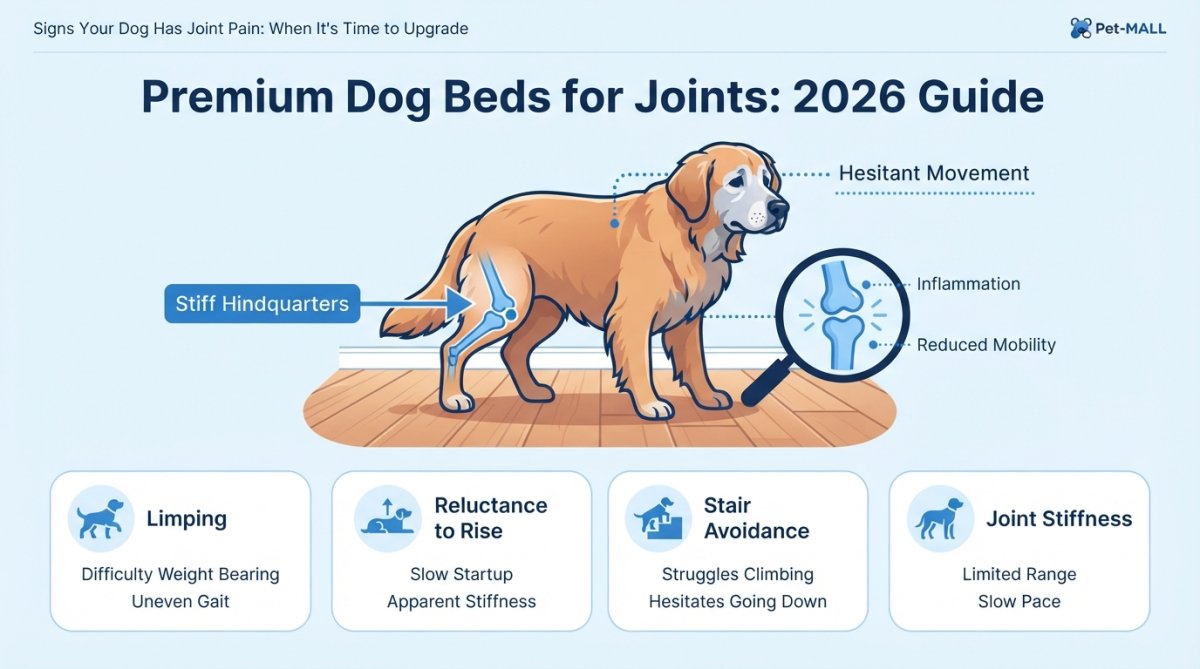
Dogs in joint pain struggle to rise after resting, especially in the morning or after long periods on the couch. They may take several attempts to stand or pause mid-motion as if gathering courage. Some develop a stiff, shuffling gait where their back legs drag slightly, or limp noticeably after activity. Others show reluctance to climb stairs, jump onto furniture, or play fetch, activities they previously enjoyed.
Watch for reluctance to lie down or inability to find a comfortable position. Arthritic dogs often circle repeatedly before settling, searching for a spot that doesn't trigger pain. Some develop a hunched posture or hold their spine rigidly. Nighttime behavior changes are equally telling: increased restlessness, frequent repositioning, whimpering when settling, or seeking softer surfaces like carpet instead of tile.
Weight gain accelerates joint deterioration. Even a 5-10 pound reduction in an overweight senior dog can noticeably improve mobility. Temperature sensitivity is another clue, many arthritic dogs become stiffer in cold weather and move better on warm days.
Key Features to Look For in Premium Dog Beds for Joints
Not all orthopedic beds are created equal. The difference between a mediocre bed and a truly therapeutic one lies in material quality, construction, and design details.
Memory Foam, Density, and Pressure Point Relief
The foam quality is non-negotiable. High-density memory foam (typically 5-6 pounds per cubic foot or higher) conforms to your dog's body, distributing weight evenly and reducing pressure point concentration. A quality orthopedic bed should have at least 4-5 inches of high-density foam; thinner beds don't provide meaningful pressure relief for dogs over 40 pounds.
Memory foam works by responding to body heat. As your dog settles in, the foam softens and molds to their shape, then slowly returns to its original form when they move. Look for CertiPUR-US certified foam, which meets strict standards for durability, emissions, and material safety. Some premium beds combine memory foam with gel-infused layers for temperature regulation, keeping your dog cooler throughout the night.
Washable Covers and Waterproof Liners
A removable, machine-washable cover is essential for long-term bed durability. Dogs with joint pain often spend 16+ hours daily on their bed, and accidents happen, especially with senior dogs dealing with incontinence. Look for covers made from durable microfiber or heavy-duty cotton blends that withstand repeated washing.
A waterproof inner liner prevents urine from seeping into the foam itself, which would require replacing the entire bed. This feature is crucial for senior dogs or those with incontinence.
Types of Orthopedic Dog Beds Explained
Different orthopedic bed designs suit different dogs and situations. Understanding the distinctions helps you choose a style that matches your dog's specific needs.
Memory Foam vs. High-Density Foam vs. Bolster Styles
Memory foam beds are the gold standard for joint pain relief. They conform to your dog's body shape, reducing pressure point concentration and supporting natural spinal alignment. This type works exceptionally well for dogs with arthritis, hip dysplasia, or post-surgical recovery needs.
High-density foam beds offer firm support without the contouring properties of memory foam. They maintain consistent firmness throughout the bed's lifespan and resist compression better than memory foam. For large dogs or those needing maximum support with minimal sinking, high-density foam is ideal and typically costs less than memory foam.
Bolster-style beds feature raised edges or walls around the perimeter, providing support for your dog's head and neck. However, bolsters can limit positioning flexibility for dogs with severe joint pain who need to frequently reposition themselves. A bed with a low, removable bolster offers flexibility.
Combination beds layer different foam types to balance cost and performance. A base of high-density foam provides structural support, topped with a thinner layer of memory foam for contouring. This approach offers better pressure relief than high-density alone while costing less than a full memory foam bed.
Best Dog Beds for Large Dogs With Arthritis
Large and extra-large dogs face particular challenges with joint pain due to their body weight stressing the skeletal system. A premium bed must handle substantial weight while providing adequate support without bottoming out.
Size Considerations and Weight Support
A bed sized for large dogs must be genuinely spacious, your dog should be able to stretch out fully without their limbs hanging over the edges. Minimum dimensions for large dogs are 40 inches long by 28 inches wide; extra-large dogs benefit from 50+ inches long by 32+ inches wide.
Weight capacity is critical. A bed rated for 75 pounds will compress and lose support under a 95-pound dog. Look for beds rated for at least 20% more than your dog's current weight. High-density foam rated for 100+ pounds ensures the bed maintains its therapeutic properties throughout its lifespan.
Breed-Specific Recommendations
Large breed dogs have breed-specific predispositions to joint problems. German Shepherds, Labrador Retrievers, and Golden Retrievers frequently develop hip dysplasia and elbow dysplasia. These breeds benefit enormously from orthopedic bedding starting in middle age, even before obvious pain symptoms emerge.
For breeds with deep chests like Great Danes or Greyhounds, a bed with raised sides can provide additional support. For breeds with long spines like Dachshunds, a bed that supports the entire spine without sagging in the middle is essential. Larger dogs also generate significant body heat, so gel-infused memory foam or beds with cooling gel layers help prevent overheating, which can worsen inflammation.
Dog Joint Supplements and Complementary Support
A premium orthopedic bed works synergistically with joint-supporting supplements. While the bed addresses sleep quality and pressure relief, supplements address inflammation and joint health from within.
How Supplements Work Alongside Premium Bedding
Glucosamine and chondroitin are the most researched joint supplements for dogs. Glucosamine helps maintain cartilage structure, while chondroitin helps cartilage retain water and resist compression. These supplements work slowly; many veterinarians recommend 8-12 weeks before expecting noticeable improvement. When combined with a quality orthopedic bed that reduces joint stress during sleep, these supplements have better conditions to work effectively.
Omega-3 fatty acids reduce inflammation throughout the body. Fish oil supplements provide EPA and DHA, which have anti-inflammatory properties. Dogs receiving omega-3s often show improved mobility within 4-6 weeks. Turmeric and curcumin have emerging research supporting their anti-inflammatory properties in dogs, with many owners reporting improved mobility within 2-3 weeks.
Transitioning Your Dog to a New Orthopedic Bed
A new bed requires adjustment. Even dogs that immediately recognize it as comfortable benefit from a gradual transition that builds positive associations.
Step-by-Step Adjustment Tips and Common Mistakes
Place the new bed in the location where your dog currently sleeps. Don't remove the old bed immediately; let your dog investigate the new one at their own pace. Encourage initial interaction by placing treats on the bed and praising your dog when they investigate or rest on it.
For dogs reluctant to use the new bed, try placing a familiar blanket or worn piece of your clothing on top initially. Your scent combined with the comfort of the bed helps dogs feel secure. As they become accustomed, gradually remove the familiar items.
Some dogs need 2-3 weeks to fully transition to a new bed. Common mistakes include moving the bed location frequently and removing the old bed too quickly. If your dog hasn't fully transitioned, removing their old familiar option creates stress rather than promoting the new bed. Keep both available until your dog clearly prefers the orthopedic bed.
Avoid punishment if your dog initially avoids the new bed. Negative associations will make them avoid it permanently. Watch for signs of acceptance: your dog voluntarily resting on the bed, settling quickly without repositioning multiple times, and appearing more comfortable during rest.
Durability, Maintenance, and Long-Term Value
A premium orthopedic bed is an investment. Understanding how to maintain it and what to expect regarding lifespan helps you maximize that investment.
CertiPUR-US Certification and Material Quality
CertiPUR-US certification verifies that foam meets strict standards for durability, emissions, and material safety. A bed with CertiPUR-US certified foam will maintain its supportive properties longer than uncertified alternatives. High-density foam (5+ pounds per cubic foot) resists compression better than lower-density alternatives. Over a 5-year period, a quality high-density foam bed will retain 85-90% of its original support.
The construction quality of the bed frame and cover attachment matters significantly. Beds with reinforced seams, strong zippers, and securely attached covers will survive years of use without falling apart. A quality orthopedic bed typically costs more upfront but lasts 5-7 years with proper care, making it more economical over your dog's lifetime than cheaper alternatives requiring replacement every 2-3 years.
Regular maintenance extends bed lifespan significantly. Wash the cover every 2-4 weeks in cool water with mild detergent. Air dry whenever possible rather than using high heat in the dryer, which degrades foam. Vacuum the bed weekly to remove dust and debris. Protect the bed from direct sunlight and keep it away from heat sources like radiators or vents.
| Maintenance Task | Frequency | Impact on Lifespan |
|---|---|---|
| Wash removable cover | Every 2-4 weeks | Prevents odor and staining, maintains cover integrity |
| Vacuum bed surface | Weekly | Removes dust and debris that degrades foam |
| Air dry cover | Always | Prevents heat damage to foam and fabric |
| Rotate bed position | Monthly | Distributes wear evenly across the foam |
| Inspect for damage | Monthly | Catches wear early before it becomes severe |
If your dog is incontinent, the waterproof liner becomes critical. Ensure urine doesn't penetrate to the foam core. If an accident occurs, clean it immediately with enzymatic cleaner designed for pet messes.
A well-maintained quality orthopedic bed provides consistent joint support for 5-7 years. At Pet-MALL, we understand that premium dog beds for joints represent a significant investment in your dog's comfort and health. By selecting a bed with quality materials, proper construction, and a waterproof liner, you're setting your senior dog up for better sleep, improved mobility, and reduced pain throughout their remaining years.
Your aging dog deserves a bed that truly supports their joints, not just marketing promises. The difference between a quality orthopedic bed and a basic option becomes obvious within weeks as your dog moves more freely, rests more comfortably, and shows renewed enthusiasm for daily activities. Pet-MALL offers a carefully curated selection of premium dog beds designed specifically for joint support, featuring high-density memory foam, CertiPUR-US certification, waterproof liners, and washable covers that stand up to years of use. Investing in a premium orthopedic bed now can add quality years to your dog's life by reducing pain, improving sleep, and supporting overall mobility during their senior years.
Orthopedic dog bed research and veterinary recommendations
CertiPUR-US foam certification standards and safety testing
Canine arthritis and joint health management guide
Frequently Asked Questions
What is the best type of dog bed for a dog with arthritis?
Memory foam orthopedic dog beds are widely recommended for dogs with arthritis. They provide superior pressure point relief and support spinal alignment, which reduces joint stress. Look for high-density foam (4+ inches thick) with therapeutic properties. CertiPUR-US certified foam ensures safety and durability. Bolster-style beds also benefit arthritic dogs by offering edge support for easier entry and exit. The best choice depends on your dog's size, severity of arthritis, and whether they prefer bolstered edges or flat surfaces.
How do I know if my dog needs a premium orthopedic dog bed?
Signs your dog has joint pain include limping, stiffness (especially after rest), difficulty climbing stairs, reluctance to jump, and changes in gait. Senior dogs, large breeds, and those with hip dysplasia benefit most from premium bedding. If your dog struggles to get comfortable on regular beds or shows reduced mobility, an orthopedic bed can significantly improve sleep quality and daytime comfort. Consult your veterinarian if you notice persistent joint issues, they can recommend supportive bedding as part of a comprehensive care plan.
Are expensive premium dog beds worth it for joint pain?
Premium dog beds for joints offer measurable benefits: better pressure relief, longer durability, and superior materials that maintain support over time. Cheap alternatives often sag quickly, losing their therapeutic properties within months. Premium beds with high-density foam and washable covers provide long-term value, especially for large dogs or senior pets who spend 12+ hours daily resting. While initial cost is higher, the investment pays off through extended lifespan and improved quality of life for your dog. Pet-MALL's curated selection ensures you're investing in vetted, quality products backed by reliable shipping and support.
What materials should I look for in an orthopedic dog bed?
Prioritize memory foam or high-density foam (at least 4 inches thick) for therapeutic support. Check for CertiPUR-US certification, which guarantees safety and durability. Microfiber or OEKO-TEX Standard 100 certified covers offer comfort and easy washing. Waterproof liners protect against accidents and extend bed life. Non-slip bases prevent sliding on hardwood floors. Egg-crate foam toppers add extra cushioning. Avoid cheap polyurethane foam that compresses quickly; it won't provide lasting joint support. Quality materials directly impact how long the bed maintains its pressure-relieving properties.
How often should I replace my dog's orthopedic bed?
Premium orthopedic dog beds typically last 3-5 years with proper care, depending on your dog's size and activity level. Replace the bed sooner if you notice sagging, loss of firmness, or visible wear. Washable covers extend overall bed life by protecting the foam core. Large dogs and those with high mobility needs may require replacement every 2-3 years. Regular maintenance, vacuuming, washing covers monthly, and air-drying, maximizes durability. When your dog's bed no longer provides proper support or shows significant compression, it's time for a replacement to maintain joint relief benefits.
This article was written using GrandRanker