


Puppy Proofing Your Home: A 2026 Safety Guide
Table of Contents
- Why Puppy Proofing Your Home Matters
- Securing Electrical Cords and How to Puppy Proof Electrical Cords
- Removing Choking Hazards and Small Objects
- Managing Toxic Plants for Dogs and Indoor Greenery
- Storing Puppy Safe Household Cleaners and Chemicals
- Creating Your Puppy Proofing Checklist for Every Room
- Using Baby Gates, Exercise Pens, and Containment Solutions
- Protecting Furniture and Managing Chewing Behavior
Last Updated: August 10, 2026
Why Puppy Proofing Your Home Matters
A new puppy explores the world through their mouth, unable to distinguish hazards from toys. Your home contains dozens of dangers: electrical cords that cause burns, toxic plants that trigger organ failure, cleaning supplies that poison, and small objects that lodge in throats. The difference between a safe puppy and a veterinary emergency often comes down to one decision made before your puppy arrives.
Puppy proofing removes conditions that lead to injury or death, allowing your puppy to explore freely while you focus on training rather than constant supervision. At Pet-MALL, we help new owners understand that the most important investment is making sure your home won't hurt your puppy while they learn what's safe to investigate.
This guide walks through every major hazard category and shows you exactly how to address each one. By the end, you'll have a puppy-proofing checklist for every room and the confidence that your new family member can safely explore their new home.
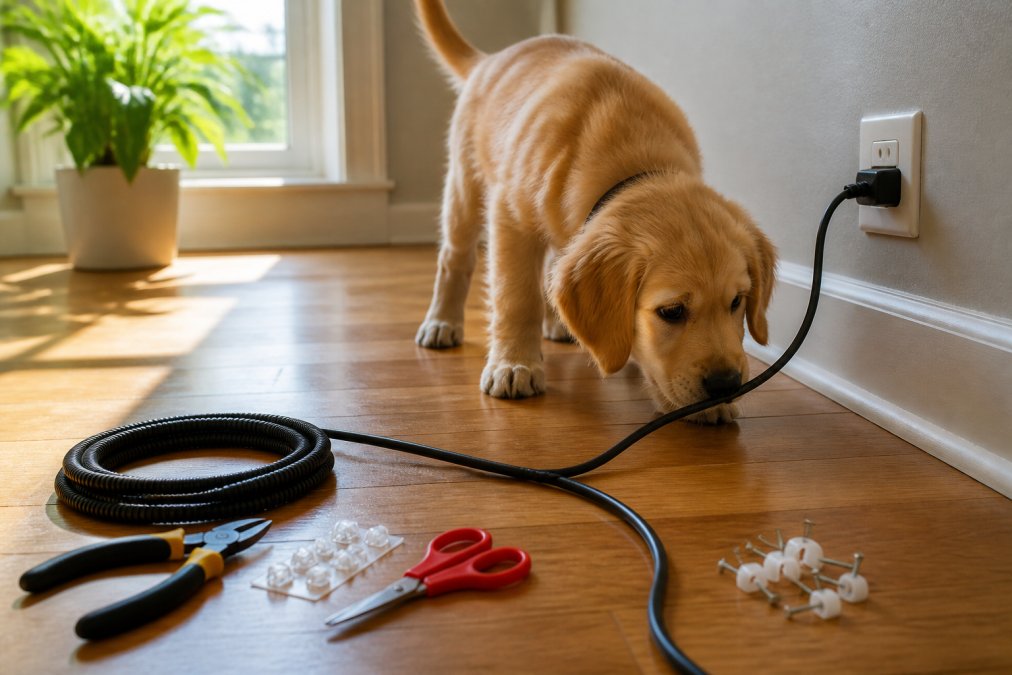
Securing Electrical Cords and How to Puppy Proof Electrical Cords
Electrical cords are among the most dangerous items in any home for a puppy. A puppy that chews through a live cord can suffer severe mouth burns, cardiac arrhythmia, or pulmonary edema. Damage happens fast and isn't always immediately visible.
How to puppy proof electrical cords:
Consolidate cords behind furniture whenever possible. Use cord concealers, plastic tubes that bundle multiple cables together and keep them away from curious mouths. For cords that must cross open floor space, use cable clips or zip ties to secure them against baseboards.
Apply bitter taste deterrents to exposed cords as a secondary defense. Consider cord protectors, flexible sleeves that cover individual cables, particularly useful for cords you can't move or conceal.
The most effective approach combines three strategies: eliminate access where possible, secure remaining cords physically, and use taste deterrents as backup.
Removing Choking Hazards and Small Objects
Choking hazards can obstruct your puppy's airway with no warning. Small objects, coins, buttons, rubber bands, small toys, pen caps, hair ties, all present serious swallowing risks.
Walk through your home at puppy eye level. You'll notice things you never saw standing up: the small plastic piece that fell off a toy, the button from a shirt, the rubber band rolled under the couch.
Common choking hazards in homes:
Toys designed for larger dogs or older children are dangerous for puppies. Inspect all toys for small parts that can be chewed off. Hair ties and rubber bands are surprisingly common culprits. Coins left on tables are attractive to puppies. Socks and underwear cause intestinal blockages regularly, store laundry in closed hampers.
Create a "puppy-safe zone" where you've removed all small objects. This becomes your puppy's primary space while you're training them what's safe to investigate. As your puppy matures and learns not to swallow random items, gradually expand their access to other areas.
Environmental management is the best choking hazard prevention. You cannot watch your puppy every second, but you can remove the items that pose the highest risk.
Managing Toxic Plants for Dogs and Indoor Greenery
Many common houseplants are toxic to dogs. Some cause mild gastrointestinal upset; others damage the liver, kidneys, or heart. The safest approach is removing toxic plants entirely from your home while your puppy is young.
Common toxic plants for dogs:
Lilies are highly toxic, even a small amount can cause acute kidney failure. Sago palms, dieffenbachia, oleander, azaleas, and philodendrons are all dangerous. Tulips, daffodils, jade plants, and aloe vera are also hazardous.
Create a list of every plant in your home, then cross-reference it against a pet toxicity database. The ASPCA Poison Control Center maintains a comprehensive list of toxic and non-toxic plants.
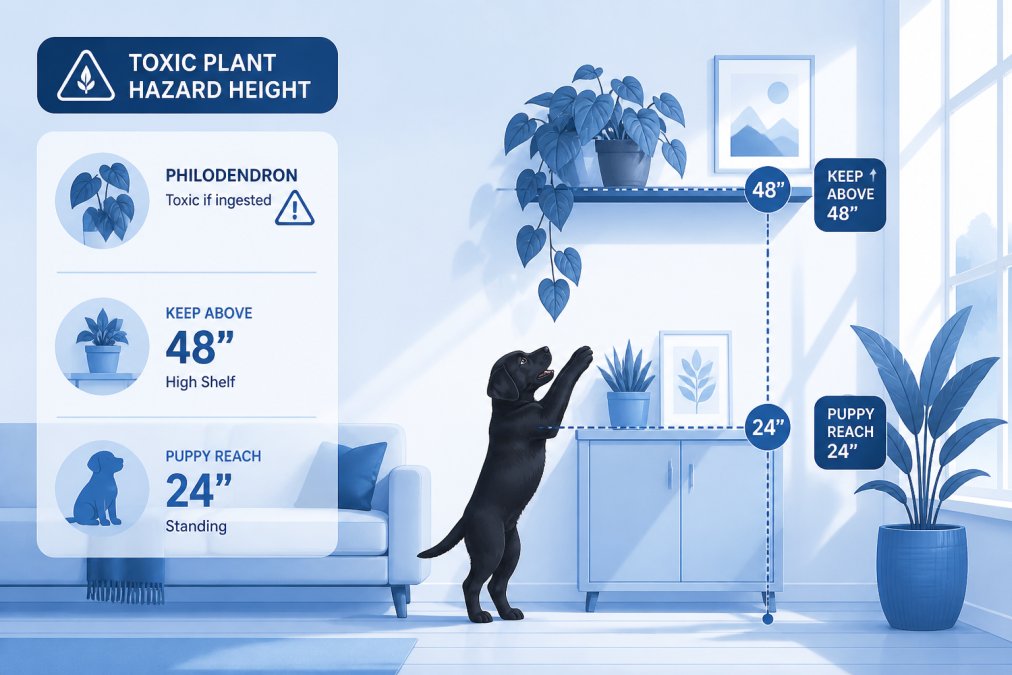
Safer alternatives:
Choose pet-safe varieties like spider plants, Boston ferns, African violets, parlor palms, areca palms, and Christmas cactus. If you're not ready to remove all toxic plants, use physical barriers. Place plants on high shelves where your puppy cannot reach them or use plant stands in corners.
Most puppies outgrow the impulse to chew plants by 12-18 months. You can reintroduce your favorite plants once your puppy has matured.
Storing Puppy Safe Household Cleaners and Chemicals
Household chemicals are among the most commonly ingested toxins in puppies. Cleaning products, laundry detergent, dishwasher pods, pesticides, and medications all pose serious risks. If your puppy can reach it, they can poison themselves with it.
Safe storage practices:
Move all household cleaners to high shelves or locked cabinets. Store medications in a locked medicine cabinet or drawer. Laundry pods are a specific hazard, store them in a sealed container in a locked cabinet, not in the standard cardboard box.
Antifreeze is lethally toxic to dogs and tastes sweet. Store it in sealed containers on high shelves. If you treat your lawn, keep your puppy indoors during treatment and for the recommended time after application.
The goal is to make chemicals inaccessible. A locked cabinet is effective; a closed door with a hook-and-eye latch is not.
Creating Your Puppy Proofing Checklist for Every Room
A comprehensive puppy-proofing checklist ensures you haven't missed critical hazards. Different rooms present different risks.
Living room and bedrooms:
- Remove or secure electrical cords
- Move plants to high shelves or remove toxic varieties
- Secure furniture that might tip if climbed
- Remove small decorative items, coins, and buttons
- Store throw blankets and pillows where they can't be chewed
- Secure window blind cords (strangulation hazard)
Kitchen:
- Store all cleaning products in locked cabinets
- Keep trash in a secured container your puppy cannot open
- Remove toxic foods (chocolate, grapes, xylitol-containing products, onions, garlic)
- Secure electrical cords from appliances
- Lock away dishwasher pods and laundry detergent
- Keep medications in locked drawers or cabinets
Bathroom:
- Lock all medications and supplements in cabinets
- Secure cleaning products
- Keep toilet lid closed or use a toilet lock
- Remove rubber bands, hair ties, and small items from counters
- Secure electrical cords from hair dryers and other appliances
Garage and outdoor spaces:
- Store antifreeze, pesticides, and fertilizers on high shelves
- Keep tools secured and out of reach
- Ensure no gaps in fencing where a puppy could escape
- Remove toxic plants from gardens
- Secure garden chemicals and pool supplies
| Room | Priority Hazards | Immediate Actions |
|---|---|---|
| Living Room | Electrical cords, toxic plants, small objects | Secure cords, remove/relocate plants, sweep for small items |
| Kitchen | Chemicals, trash, toxic foods | Lock cleaners away, secure trash, remove toxic items |
| Bedroom | Small objects, electrical cords, laundry | Remove items from floor, secure cords, store clothes in closed hamper |
| Bathroom | Medications, chemicals, small items | Lock medicine cabinet, secure cleaning products, remove items from counters |
| Garage | Antifreeze, tools, chemicals | Move hazardous items to high shelves, secure tools |
Print this checklist and work through each room systematically. This prevents the common mistake of assuming you've addressed a hazard when you've only partially addressed it.
Using Baby Gates, Exercise Pens, and Containment Solutions
Physical containment is one of the most effective puppy-proofing strategies. Baby gates and exercise pens create safe zones where your puppy can play without access to hazards.
Baby gates work best at doorways between rooms. Choose gates tall enough that your puppy can't jump over them. Hardware-mounted gates are more secure than pressure-mounted gates, especially for larger breeds.
Exercise pens provide flexible containment:
An exercise pen is a portable barrier system, typically 8 panels that connect to form an octagon or rectangle. Set up a pen with a comfortable bed, water bowl, and a few toys inside. This becomes your puppy's safe space.
The advantage of exercise pens is flexibility. You can adjust the size based on your puppy's age and energy level. As your puppy grows, you can expand the pen or remove it entirely once they've learned appropriate boundaries.
Crate training integrates with containment:
A properly sized crate serves as a portable safe zone. Your puppy's crate should be large enough for them to stand, turn around, and lie down comfortably, but not so large that they can use one corner as a bathroom.
Introduce the crate as a positive space with treats and toys. Leave the door open initially so your puppy can explore voluntarily. A crated puppy cannot access hazards, making crates invaluable when you cannot actively supervise.
The combination of baby gates, exercise pens, and crate training creates a multi-layered containment strategy.
Protecting Furniture and Managing Chewing Behavior
Chewing is normal puppy behavior. The goal isn't to stop chewing, it's to direct chewing toward appropriate toys and away from furniture and household items.
Furniture protection strategies:
Cover furniture with protective blankets or furniture covers. Apply bitter taste deterrents to furniture legs. Use furniture pads or corner guards on pieces you want to protect. Keep your puppy away from tempting items during the critical chewing phase (typically 3-6 months).
Appropriate chewing outlets:
Invest in high-quality chewing toys designed for puppies. Rubber toys like Kongs can be filled with treats or peanut butter. Rope toys, nylon chews, and natural chew products all provide appropriate outlets.
Rotate toys every few days to prevent boredom. Monitor your puppy while they're chewing and remove toys being destroyed before they ingest pieces.
The key insight is that chewing behavior will happen regardless of your efforts to prevent it. By providing appropriate outlets and removing access to inappropriate items, you're directing an instinctive behavior toward safe targets.
Puppy proofing your home is a project that pays dividends for years. The effort you invest in the first few months prevents emergency vet visits, destroyed furniture, and constant worry about what your puppy is getting into. A properly puppy-proofed home lets your puppy explore and learn while you focus on the joy of having a new family member.
At Pet-MALL, we believe puppy safety starts with environmental management. Our curated selection of puppy-safe products, from secure containment systems to durable chewing toys, makes it easier to create that safe environment. When you're choosing toys, gates, and bedding that are specifically vetted for puppy safety, you're building a foundation for a healthy, happy first year. Get started with Pet-MALL and invest in the products that let your puppy thrive safely in their new home.
Frequently Asked Questions
What household items are toxic to puppies?
Many common household items pose serious ingestion risks to puppies. Toxic plants like lilies, sago palms, and dieffenbachia can cause organ damage. Medications, vitamin supplements, chocolate, xylitol-sweetened foods, and antifreeze are all dangerous if swallowed. Household chemicals including cleaning supplies, pesticides, and certain plants should be stored securely out of reach. Always keep medications in closed cabinets and never leave food or chemicals on counters or tables where curious puppies can access them.
How do I stop my puppy from chewing furniture?
Redirect chewing behavior by providing appropriate chew toys and using bitter taste deterrents on furniture legs and corners. Supervise your puppy closely and immediately redirect them to an approved toy when they begin chewing furniture. Exercise pens and baby gates help confine your puppy to safe areas when you cannot supervise. Ensure your puppy gets adequate physical activity and mental stimulation through play, which reduces destructive chewing. Consistency and positive reinforcement when they chew appropriate items work better than punishment.
Can I leave my 9-week-old puppy home alone?
A 9-week-old puppy should not be left alone for extended periods. Young puppies have limited bladder control and need frequent bathroom breaks every 2-3 hours. Leaving them alone too long causes anxiety, accidents, and destructive behavior. Consider hiring a pet sitter, using doggy daycare, or arranging for family to visit during the day. If you must leave your puppy alone briefly, ensure they are in a safe, puppy-proofed space like a crate or exercise pen with water available and nothing hazardous within reach.
What is the 3-3-3 rule for puppies?
The 3-3-3 rule is a guideline for puppy adjustment: the first 3 days are about decompression as your puppy adjusts to their new home, the first 3 weeks involve basic routine establishment and initial training, and the first 3 months focus on bonding and foundational obedience. During this period, puppy proofing your home becomes increasingly important as your puppy becomes more confident and explores their environment more actively. Proper environmental management during these critical months prevents accidents and dangerous behaviors from developing.
How should I puppy proof my apartment differently from a house?
Apartment puppy proofing requires special attention to shared walls and limited outdoor space. Focus on soundproofing to minimize noise complaints, secure balconies and windows to prevent escapes, and use washable floor protectors since you cannot install permanent fixtures. Apartments typically have less square footage, so containment with exercise pens and baby gates is especially valuable. Coordinate with building management about pet policies, ensure all cables and cords are secured since you share utilities, and establish a reliable outdoor potty routine since yard access is limited or unavailable.
What should be on my puppy proofing checklist before bringing my puppy home?
Your puppy proofing checklist should cover: securing all electrical cords with cord concealers and cable clips, removing toxic plants and hazardous items, storing household chemicals and medications in locked cabinets, blocking off unsafe rooms with baby gates, removing choking hazards and small objects from floors, securing trash cans, protecting furniture with deterrents, setting up a safe sleeping area, and installing exercise pens. Walk through each room systematically and check at puppy eye level where they can reach. Include seasonal hazards like holiday decorations and outdoor chemicals if applicable to your situation.
Are there smart home devices that help with puppy safety?
Yes, smart home technology can enhance puppy safety and supervision. Smart cameras with two-way audio let you monitor your puppy remotely and provide corrections or reassurance. Smart door locks prevent unauthorized access to unsafe areas, and smart lighting can be programmed to keep puppy spaces well-lit. Motion sensors can alert you when your puppy enters restricted zones. Some pet owners use smart thermostats to maintain comfortable temperatures in puppy areas. While technology helps, it should never replace proper puppy proofing and direct supervision, especially with young puppies under 12 weeks.
What budget-friendly DIY solutions work for puppy proofing?
Several low-cost DIY solutions effectively puppy-proof your home. Use PVC pipe or pool noodles to cover exposed electrical cords instead of buying expensive cord concealers. Create barriers from cardboard boxes or repurposed materials to block off unsafe areas. Make your own bitter taste deterrent spray using apple cider vinegar and water to discourage chewing. Use baby gates from thrift stores or borrow from friends instead of buying new ones. Rearrange furniture to create natural barriers, store items in existing cabinets rather than buying new storage, and use newspaper or washable pads for potty training instead of expensive pads. These solutions provide essential safety without significant expense.
This article was written using GrandRanker