


Safe Materials for Pet Beds: A Complete Guide
Table of Contents
- Why Safe Materials for Pet Beds Matter
- Natural vs. Synthetic Materials: What You Need to Know
- Toxic Materials to Avoid in Pet Bedding
- Non-Toxic Dog Bed Brands and What Makes Them Safe
- Pet Bed Safety Standards and Third-Party Certifications
- How to Clean Pet Beds Safely Without Harmful Chemicals
- Hypoallergenic Properties and Mold Resistance
- Durability, Chew-Resistance, and End-of-Life Disposal
Last Updated: August 8, 2026
Why Safe Materials for Pet Beds Matter
Your pet spends roughly 8 hours every day sleeping on their bed. When you consider that's a third of their life, the material composition becomes a foundational health decision, not a minor detail.
Many pet owners don't realize what's actually in their pet's bed. Conventional bedding often contains synthetic materials treated with flame retardants, volatile organic compounds (VOCs), and chemical dyes that off-gas continuously. Your pet inhales these compounds every time they rest. Over months and years, exposure to toxic materials can contribute to respiratory issues, skin irritation, allergies, and chronic health problems.
This guide covers the materials you should seek out, the toxic compounds to avoid, how to verify certifications, and practical maintenance steps. By the end, you'll know exactly what to look for when evaluating safe materials for pet beds.
Natural vs. Synthetic Materials: What You Need to Know
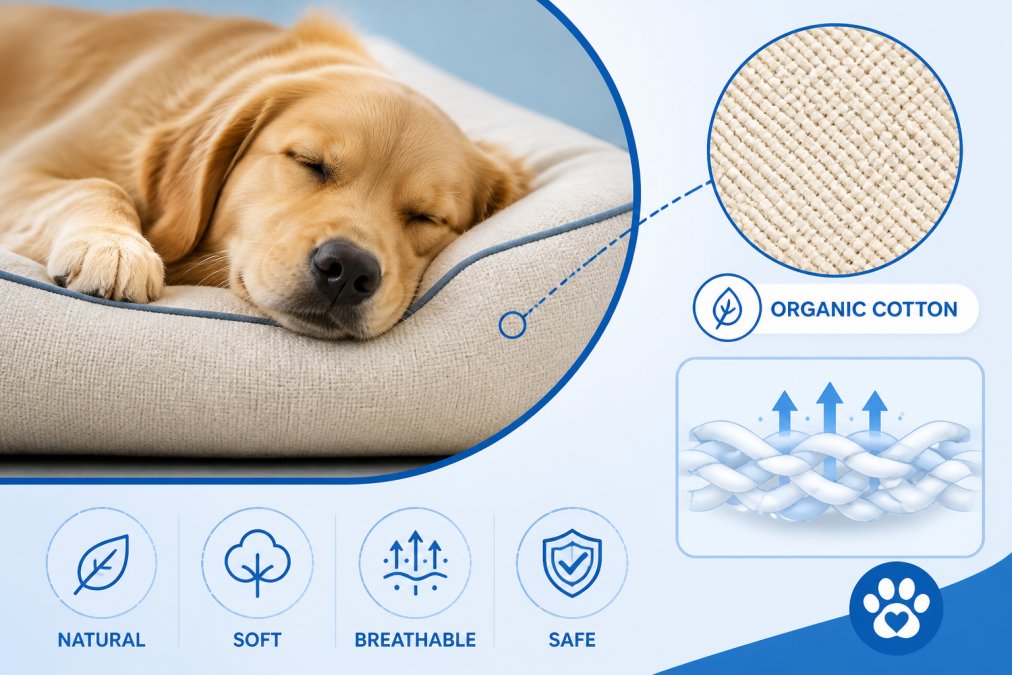
The fundamental choice in pet bedding comes down to natural fibers or synthetic ones. Natural materials like organic cotton, natural latex, hemp, and linen offer breathability, biodegradability, and lower chemical loads. Synthetic materials like polyurethane foam and conventional polyester are cheaper but come with hidden costs in off-gassing and environmental impact.
Natural materials allow air circulation, preventing moisture buildup and mold growth. They're less likely to trigger allergies because they haven't been treated with chemical finishes. Synthetic materials often rely on flame retardants and waterproofing agents, meaning your pet breathes in those chemicals every night.
Organic Cotton and Its Benefits
Organic cotton is grown without synthetic pesticides, herbicides, or genetically modified seeds. For pet bedding, this matters because conventional cotton farming uses heavy pesticide loads that can remain in the finished fabric.
Organic cotton bedding is naturally breathable, wicking moisture away from your pet's skin and preventing the damp environment where mold thrives. Quality organic cotton withstands hundreds of wash cycles without breaking down, lasting 2-3 years of regular use. The fabric is hypoallergenic by nature and doesn't require synthetic dyes or chemical finishes, giving you a cleaner product overall. For pets with sensitive skin or allergies, organic cotton is one of the safest starting points.
Natural Latex for Orthopedic Support
Natural latex comes from rubber tree sap and provides firm, responsive support that conforms to your pet's body shape. Unlike memory foam, which off-gasses significantly, natural latex is stable and doesn't break down into airborne particles.
Natural latex distributes weight evenly, reducing pressure points on joints and spine. For older dogs with arthritis or large breeds prone to joint problems, a natural latex bed can noticeably improve comfort. The material is naturally resistant to dust mites and mold because latex's structure doesn't provide an environment where these organisms thrive. Natural latex does have a smell when new, but this typically fades within a week or two of airing out the bed.
Hemp and Linen as Eco-Friendly Alternatives
Hemp and linen require minimal pesticide use compared to conventional cotton. Hemp is particularly durable and becomes softer with washing, making it ideal for beds that withstand heavy use or chewing. Linen offers exceptional breathability and temperature regulation, keeping pets cooler naturally in warm climates. Both fibers are biodegradable, breaking down in the environment rather than persisting in landfills. The trade-off is that these materials are less commonly used in pet bedding, so options are more limited and typically cost more.
Toxic Materials to Avoid in Pet Bedding
Understanding what to avoid is as important as knowing what to seek out.
Flame Retardants and VOCs
Flame retardants are chemicals added to fabrics and foam to meet fire safety standards. These chemicals leach out over time, especially when exposed to heat, moisture, or friction from your pet moving around.
VOCs (volatile organic compounds) are chemicals that evaporate at room temperature, releasing into the air your pet breathes. Common sources include synthetic dyes, chemical adhesives, and waterproofing treatments. Many conventional pet beds off-gas VOCs for weeks or months after purchase. Chronic VOC exposure can cause respiratory irritation, skin reactions, and exacerbation of existing allergies, particularly in pets with compromised immune systems or respiratory conditions.
Heavy Metals, Phthalates, and Formaldehyde
Heavy metals like lead and cadmium can be present in synthetic dyes and manufacturing processes. While concentration in a single bed may be low, chronic exposure over years accumulates.
Phthalates are plasticizers used to make materials flexible, particularly common in PVC-based waterproofing layers. They're known endocrine disruptors, interfering with hormonal systems even at low doses.
Formaldehyde is used as a preservative and finishing agent in many textiles. It's a known carcinogen and respiratory irritant that can be present in both natural and synthetic bedding if conventional finishing processes are used. To avoid these compounds, look for bedding that explicitly states it's free of these chemicals and has third-party testing to back up that claim.
Non-Toxic Dog Bed Brands and What Makes Them Safe
The safest pet bed brands share common characteristics: transparent material sourcing, third-party certifications, and honest communication about what's in their products.
Pet-MALL offers a curated selection of pet bedding options that prioritize safety and quality. We work exclusively with brands that provide full transparency about materials, manufacturing processes, and certifications. When evaluating any non-toxic dog bed brand, ask: Can they provide a full material list with no vague terms? Do they have third-party certifications? Are they willing to discuss manufacturing partners and quality control? Brands transparent about these details are worth trusting.
Pet Bed Safety Standards and Third-Party Certifications
Third-party certifications are your most reliable way to verify that a pet bed actually contains what the manufacturer claims.
Understanding Certifications and Avoiding Greenwashing
The most relevant certifications for pet bedding are OEKO-TEX Standard 100, GOTS (Global Organic Textile Standard), and Cradle to Cradle.
OEKO-TEX Standard 100 tests for harmful substances including heavy metals, formaldehyde, phthalates, and pesticide residues. A product with this certification has been independently tested and confirmed to be free of substances above established safety limits.
GOTS certification verifies that organic fibers have been grown and processed without synthetic pesticides, GMOs, or heavy metal contamination, and includes social and environmental criteria for manufacturing.
Cradle to Cradle certification evaluates the entire lifecycle of a product, including material health, recyclability, and manufacturing practices. A certified bed is designed to be either safely returned to nature or returned to manufacturing without creating waste.
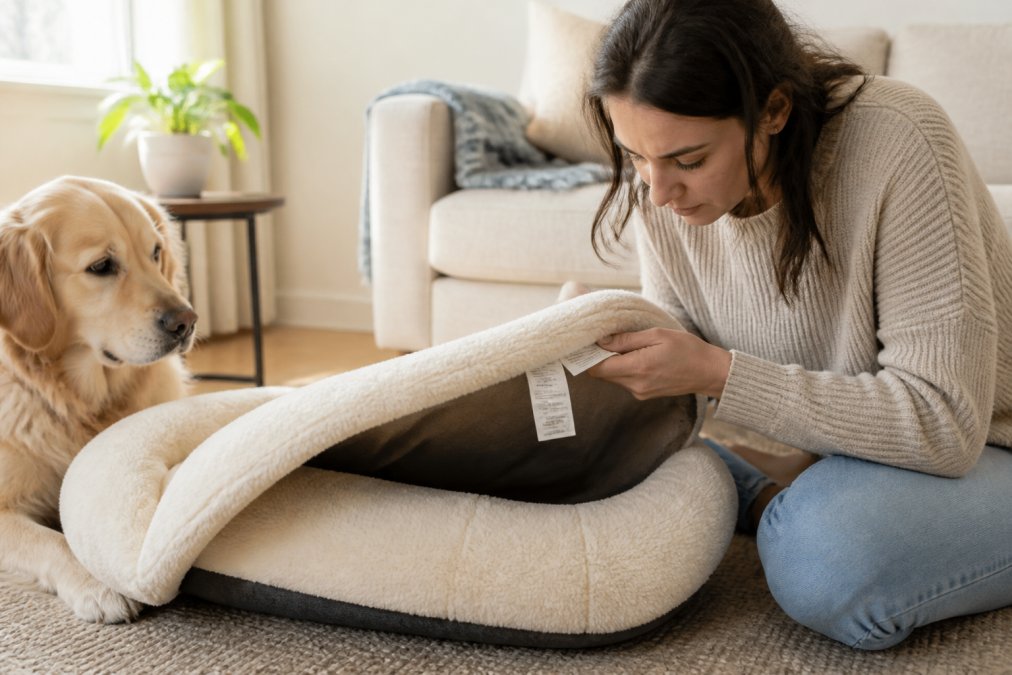
Greenwashing is rampant in the pet industry. Brands use terms like "natural," "eco-friendly," and "safe" without backing certification. A bed marketed as "made with natural materials" could still contain synthetic foam and chemical dyes. Look for specific, verifiable certifications from recognized third parties, not just marketing language. If a brand claims their bed is safe but can't produce a certification or test report, that's a red flag.
How to Clean Pet Beds Safely Without Harmful Chemicals
Even the safest pet bed can become contaminated if washed with harsh chemicals.
Most pet bed covers are machine washable. Use warm water and mild, fragrance-free detergent. Avoid bleach, fabric softeners, and laundry additives, which introduce new chemical residues that can irritate your pet's skin.
For spot cleaning, mix equal parts white vinegar and water. For stubborn stains, use a paste of baking soda and water. Dry your pet bed in the sun whenever possible, sunlight is a natural disinfectant. If using a dryer, use the lowest heat setting. Wash your pet's bed every 1-2 weeks to keep dust, allergens, and bacteria from accumulating.
Hypoallergenic Properties and Mold Resistance
Natural materials like organic cotton, natural latex, hemp, and linen are inherently more hypoallergenic than synthetic options because they don't require chemical treatments that trigger reactions. They also have natural properties that discourage mold and mildew growth. Natural latex's cellular structure doesn't provide the moist environment where mold thrives.
Mold resistance is critical for pet bed safety. A damp bed becomes a breeding ground for mold and mildew, which release spores your pet inhales. This is particularly problematic for pets with respiratory issues. Materials that wick moisture away and allow air circulation prevent this naturally. In humid climates, prioritize bedding with excellent breathability, linen excels at moisture-wicking, while many synthetic options trap moisture.
Durability, Chew-Resistance, and End-of-Life Disposal
A truly safe pet bed needs to last. Beds that fall apart after a few months end up in landfills, increasing your pet's exposure to new chemical off-gassing.
Quality natural materials are more durable than expected. Organic cotton beds with tight weaving withstand hundreds of wash cycles. Natural latex doesn't degrade like memory foam. Hemp fiber becomes stronger over time with washing. For pets that chew, look for tight, dense weaving and materials like hemp that resist tearing.
Biodegradable Options and Environmental Impact
At end-of-life, natural materials like organic cotton, hemp, and linen break down within months when composted, while synthetic materials persist in landfills for decades. Some manufacturers offer take-back programs for proper disposal or composting. Organic cotton requires less water and pesticides than conventional cotton. Hemp grows without pesticides and improves soil health. Natural latex production has a lower carbon footprint than petroleum-based foam manufacturing.
Choosing safe materials for pet beds is one of the most direct ways to protect your pet's long-term health. The difference between a bed filled with flame retardants and VOCs and one made from organic cotton or natural latex compounds over months and years. Your pet deserves to sleep on materials that support their health rather than compromise it. Pet-MALL's curated selection focuses exclusively on bedding options verified for safety, with transparent material sourcing and third-party certifications. Start by checking for OEKO-TEX or GOTS certification, verify the material composition matches marketing claims, and choose breathable, hypoallergenic options whenever possible.
| Material | Best For | Durability | Hypoallergenic | Biodegradable |
|---|---|---|---|---|
| Organic Cotton | General use, sensitive skin | 2-3 years | Yes | Yes |
| Natural Latex | Orthopedic support, older pets | 3-5 years | Yes | Yes |
| Hemp | Heavy use, chewers | 3-4 years | Yes | Yes |
| Linen | Hot climates, moisture-wicking | 2-3 years | Yes | Yes |
| Polyurethane Foam | Budget option | 1-2 years | No | No |
Frequently Asked Questions
What are the safest materials for pet beds?
The safest materials for pet beds include organic cotton, natural latex, hemp, and linen. These materials are non-toxic, hypoallergenic, and free from harmful chemicals like flame retardants and phthalates. Look for beds with certifications like GOTS (Global Organic Textile Standard) or OEKO-TEX, which verify the materials have been tested for hazardous substances. Avoid synthetic polyurethane foam and polyester blends unless they are explicitly certified as formaldehyde-free and VOC-free.
How do I know if a dog bed is non-toxic?
Check for third-party certifications such as GOTS, OEKO-TEX, or CertiPUR-US, which guarantee the materials have been tested for harmful chemicals. Review the product label for claims like 'formaldehyde-free,' 'phthalate-free,' and 'no flame retardants.' Request a material safety data sheet (MSDS) from the manufacturer if available. Reputable non-toxic dog bed brands will prominently display their certifications and be transparent about their sourcing and manufacturing processes.
Are polyester dog beds safe for pets?
Standard polyester dog beds may contain off-gassing chemicals, synthetic dyes, and flame retardants that can harm your pet's health. However, some polyester beds are treated with safe, low-VOC finishes and certified as non-toxic. If choosing a polyester bed, verify it has OEKO-TEX or similar certification, is labeled formaldehyde-free, and comes from a reputable brand that prioritizes pet health. Natural fiber alternatives like organic cotton or hemp are generally safer choices.
What bedding material is best for pets with allergies?
Hypoallergenic materials like organic cotton, natural latex, and hemp are ideal for pets with allergies. These materials resist mold and mildew, which trigger allergic reactions, and are free from synthetic dyes and chemical treatments that cause skin irritation. Avoid polyurethane foam and fiberfill unless certified hypoallergenic. If your pet has specific allergies, consider allergy testing for individual fibers before purchasing, and always choose washable covers so you can clean the bed regularly without harsh chemicals.
This article was written using GrandRanker