


Why Pet Toys Break Quickly: A Complete Guide
Table of Contents
- Why Pet Toys Break Quickly: The Main Culprits
- Material Durability and Construction Quality
- Durable Dog Toys for Aggressive Chewers
- How to Choose Safe Pet Toys
- Signs a Dog Toy Is Unsafe
- Toy Rotation Strategy and Replacement Cycle
- Conclusion
Last Updated: August 19, 2026
Why Pet Toys Break Quickly: The Main Culprits
Your dog destroys a toy in two days. You buy another. Same result. Pet toys break quickly because of a perfect storm of factors: your dog's natural instincts, the materials used in construction, and how toys are designed for mass market rather than heavy use. Understanding why helps you choose toys that actually survive your pet's play style.
Instinctual Prey Drive and Hunting Behavior
Dogs chew toys because hunting is hardwired into their DNA. That squeak mimics prey. The shaking motion your dog performs is the same technique wolves use to break the necks of small animals. Your dog isn't being destructive, your dog is being a dog.
Small-breed dogs, toy breeds, and terriers were specifically bred to hunt small prey. They have a predatory instinct that's just as strong as a larger dog's, sometimes stronger. When a toy triggers that prey drive, your dog will shake it, thrash it, and work to "kill" it with the same intensity a wolf would use on real prey.
This explains why toys with squeakers get destroyed faster than silent toys. The squeaker activates the hunting sequence. Your dog isn't trying to break the toy; your dog is trying to silence the "prey."
The Role of Tugging and Shaking in Toy Wear
Tugging and shaking are the primary mechanisms that destroy pet toys. When your dog grabs a toy and shakes it side to side, stress concentrates on the seams and material. A single vigorous shake can create micro-tears in fabric. Repeated shaking compounds those tears until the toy fails.
Shaking applies force in multiple directions simultaneously. The toy is pulled, twisted, and jerked. Seams stitched in a straight line can't handle multidirectional stress. Tugging is equally damaging, especially in tug-of-war play. The constant back-and-forth motion puts extreme tension on seams and material. Most mass-market toys fail this test within days or weeks.
Boredom and Lack of Mental Stimulation
A bored dog chews more aggressively than an engaged dog. When dogs lack mental stimulation, they redirect energy into destructive chewing. A bored dog might destroy a toy in hours, while a playing dog might take days. The intensity is higher because the motivation is different.
Pet owners often assume their dog is aggressive or destructive. In reality, the dog needs more interactive play, puzzle feeders, or environmental enrichment. Once you increase mental stimulation, the same dog often treats toys more gently.
Separation Anxiety and Stress-Induced Chewing
Separation anxiety transforms a toy from a plaything into a stress-relief object. Dogs with anxiety attack toys with intensity that increases dramatically when stress hormones are elevated.
A dog with separation anxiety will destroy a toy within minutes of being left alone. The chewing is compulsive and aggressive. If your dog destroys toys only when you leave, separation anxiety is likely the culprit. Addressing the underlying anxiety will extend toy lifespan more than any material upgrade will.
Material Durability and Construction Quality
Not all pet toys are created equal. The difference between a toy that lasts two days and one that lasts two months comes down to materials and construction.
What Makes a Toy Truly Durable
A durable toy has three essential components: strong outer material, reinforced seams, and appropriate thickness. Most mass-market toys fail on at least one criterion.
The outer material must resist tearing and puncturing. Thick, tightly woven materials hold up better than thin nylon or canvas. Seams are where most toys fail. Double-stitched or triple-stitched seams, especially with reinforced corners, hold together much longer. Some premium toys use "box stitching," where the seam is stitched in multiple directions to distribute stress across multiple threads.
Thickness provides a buffer. A toy made from thin material can be punctured in a single bite. Thick material requires sustained chewing to fail. Many premium toys use layered construction to create durability without excessive weight.
Ballistic Nylon vs. Natural Rubber: Material Science Breakdown
Ballistic nylon is a densely woven synthetic fabric originally developed for military applications. It's significantly more tear-resistant than standard nylon. The tight weave means fewer gaps for teeth to catch and tear.
Natural rubber is elastic and resilient. It's harder for teeth to grip, so shaking is less effective at tearing it. Rubber also tends to be thicker than fabric. However, natural rubber can be punctured by sharp teeth and degrades over time with UV exposure.
The best durable toys combine both materials. A ballistic nylon exterior resists tearing, while a natural rubber core provides elasticity and puncture resistance. TPR (thermoplastic rubber) is similar to natural rubber but more durable. Neoprene is thick and flexible, making it resistant to tearing.
Durable Dog Toys for Aggressive Chewers
Aggressive chewers need toys specifically designed for high-intensity play. Standard toys won't survive.
Identifying Your Dog's Destruction Profile
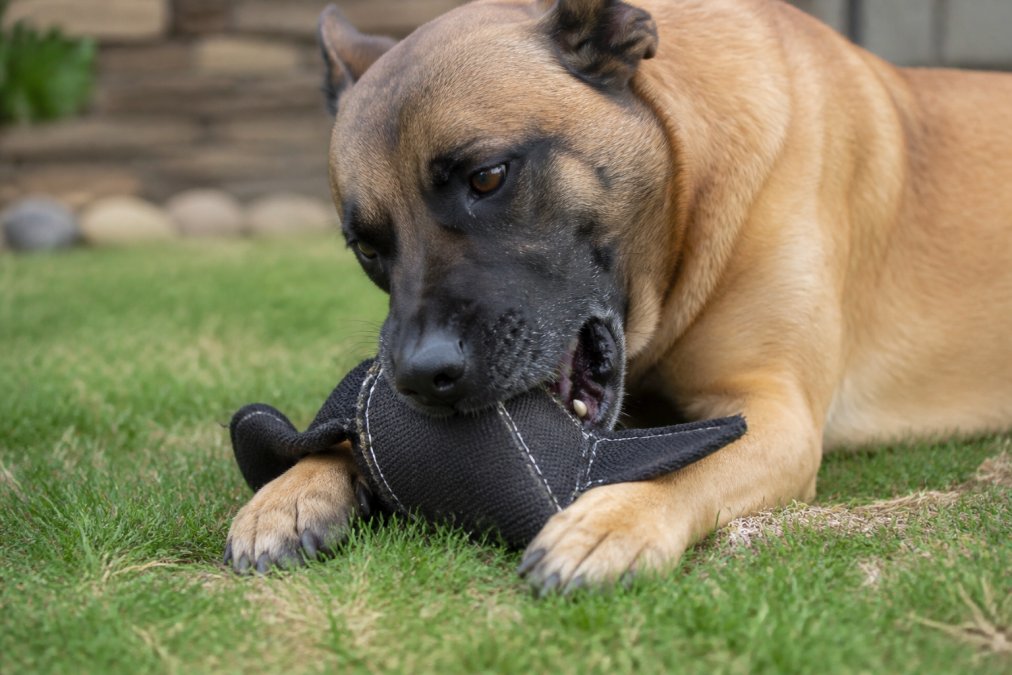
Not all aggressive chewers are the same. Some shake toys violently. Others use back teeth to grind and crush. Some combine both behaviors. Understanding your dog's specific chewing pattern helps you choose a toy that will survive.
Watch your dog play. Does your dog shake toys side to side? Use back teeth to grind? Try to tear the toy apart? Attempt to separate layers? The specific behaviors tell you what kind of toy will survive.
Choosing by Chew Intensity Level
Mild chewers can use most standard toys. Toy lifespan is often limited by boredom rather than destruction.
Moderate chewers need toys with reinforced seams and thicker material. Ballistic nylon or rubber toys survive longer. Seam quality becomes critical because moderate chewers will find and attack weak points.
Aggressive chewers need industrial-grade construction. Ballistic nylon is a minimum. Reinforced corners and box stitching are essential. Many benefit from toys made primarily from natural rubber or TPR, which resist puncturing better than fabric.
Power chewers (the most destructive category) need toys designed for sustained abuse. These often feature multiple layers, reinforced stress points, and materials chosen specifically for puncture resistance. A toy designed for power chewers might survive weeks or months instead of hours.
How to Choose Safe Pet Toys
Safety is as important as durability. A toy that lasts forever but poses a choking hazard isn't a good choice.
Matching Toy Size to Your Pet
Toy size should match your dog's mouth size and body size. A toy that's too small is a choking hazard.
For small dogs (under 15 pounds), toys should be large enough that the dog can't fit the entire toy in its mouth. A good rule is that the toy should be at least the size of your dog's head.
For medium dogs (15-50 pounds), toys should be proportional to mouth size. The toy should still be large enough that it can't be swallowed whole.
For large dogs (over 50 pounds), toy size can be larger, but the principle remains the same. The toy should be sized so your dog can play comfortably without being able to swallow it.
Supervised Play vs. Independent Play
Supervised play allows you to monitor toy condition and remove the toy before it becomes dangerous. You can intervene if your dog is playing too aggressively or if the toy is being damaged faster than expected.
Independent play means your dog has access to the toy without supervision. This is convenient but higher-risk. Your dog might swallow pieces you don't notice.
For aggressive chewers, supervised play is safer. You can see when the toy is starting to fail and remove it before pieces are ingested. You can also rotate toys frequently, which extends lifespan and prevents boredom.
Signs a Dog Toy Is Unsafe
A toy that was safe yesterday might be unsafe today. Regular inspection is essential.
Visual Warning Signs and Fabric Fatigue
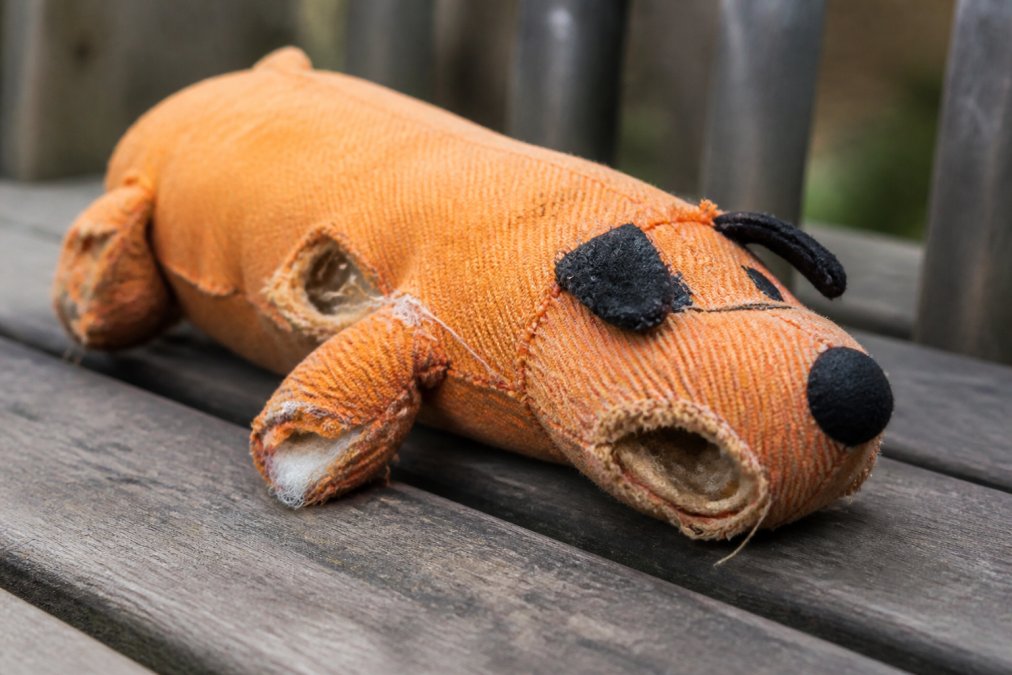
Visible tears or holes are obvious warning signs. Any toy with a hole large enough for your dog to access the stuffing should be removed immediately. Stuffing is a choking hazard and can cause intestinal blockages.
Loose threads or seams that are separating indicate the toy is failing. Seams don't fail all at once; they separate gradually. Once a seam is separating, the toy's structural integrity is compromised.
Soft spots or areas where material is thinner than elsewhere indicate uneven wear. These weak points will fail first. Discoloration or material that looks worn and faded often indicates the material is degrading.
Safety Hazards of Ingested Materials
The most serious risk from failing toys is gastrointestinal obstruction. When a dog swallows toy pieces, they don't digest. The pieces accumulate in the stomach or intestines, blocking normal passage of food and waste. A complete blockage requires emergency surgery.
Stuffing is particularly dangerous. Polyester fiberfill doesn't break down in the digestive system. A dog can swallow a significant amount without the owner noticing. Foam pieces are similarly dangerous. Rubber pieces are less likely to cause blockages because rubber is denser. String or rope fibers can wrap around the intestines, causing a linear foreign body blockage.
Signs of a potential blockage include vomiting, loss of appetite, lethargy, and abdominal pain. If you suspect your dog has swallowed toy pieces, contact a veterinarian immediately.
Toy Rotation Strategy and Replacement Cycle
The best way to extend toy lifespan and prevent boredom is to rotate toys. Instead of leaving all toys out all the time, keep most toys in storage and rotate them regularly.
Rotation works because novelty extends engagement. A toy your dog ignored yesterday becomes interesting again after two weeks in storage. This renewed interest means more play and less destructive chewing born from boredom.
Rotation also spreads wear across multiple toys instead of concentrating wear on one or two. If you have four toys in rotation, each toy gets used only one week out of every four. This extends the lifespan of each toy significantly.
Most aggressive chewers should have toys replaced every 2-4 weeks, depending on construction and your dog's intensity. Moderate chewers can often go 4-8 weeks. Mild chewers might use a toy for several months.
Pet-MALL recommends inspecting toys weekly and replacing them as soon as they show signs of failure. A toy that's starting to fail should be removed immediately. Keep a rotation schedule to ensure you're not overlooking toys that are failing silently.
Pet toys break quickly because of a combination of factors: your dog's natural instincts, inadequate material choices, and poor construction quality in mass-market toys. Understanding these factors helps you make smarter purchasing decisions. When you choose toys with ballistic nylon construction, reinforced seams, and appropriate sizing, you'll see dramatic improvement in durability. Pet-MALL's curated selection of premium toys is specifically chosen for aggressive chewers and includes options with reinforced stitching and durable materials that survive weeks of intensive play instead of days. Get started with Pet-MALL and invest in toys that actually last, your wallet and your dog will thank you.
Frequently Asked Questions
Why do dogs rip toys apart so quickly?
Dogs tear toys apart due to natural prey drive, tugging instincts, and the physical force of shaking. Aggressive chewing combined with weak seam reinforcement or low-quality materials causes rapid destruction. Boredom and separation anxiety intensify destructive behavior. Understanding your dog's chew intensity helps you select toys with proper ballistic nylon construction and reinforced stitching to resist these natural behaviors.
What materials are most resistant to heavy chewers?
Ballistic nylon and natural rubber are among the most durable materials for aggressive chewers. Ballistic nylon resists fabric fatigue and tearing, while natural rubber provides elasticity without breaking easily. Look for toys with reinforced seams, multiple stitching layers, and thick construction. Avoid thin fabrics, single-stitched seams, and materials that splinter or shed fibers, as these pose choking hazards and gastrointestinal obstruction risks.
How can I tell if a toy is safe for my pet's chewing style?
Assess your dog's destruction profile by observing whether they shake, tug, or puncture toys. Match toy durability to chew intensity: light chewers can use softer materials, while power chewers need ballistic nylon and reinforced construction. Check for secure stitching integrity, no loose parts, and appropriate sizing. Supervise play initially to monitor for fabric fatigue. Replace toys showing tears, loose threads, or missing pieces immediately to prevent ingestion hazards.
Should I rotate my dog's toys to make them last longer?
Yes. Toy rotation reduces wear on individual toys and combats boredom-driven destruction. Rotating toys every few days maintains your dog's interest and prevents excessive mastication on a single toy. This strategy extends the replacement cycle and provides mental stimulation through novelty. Store unused toys away and reintroduce them weekly to keep environmental enrichment fresh while allowing worn toys recovery time before disposal.
This article was written using GrandRanker
Shop General Pet Care & Behavior: Browse our General Pet Care & Behavior collection for products picked to match what you just read.