


How to Puppy Proof Your Home: Complete 2026 Guide
Table of Contents
- Why Puppy Proofing Your Home Matters
- Identifying Household Hazards: A Room-by-Room Assessment
- Toxic Plants for Dogs: What to Remove or Relocate
- Securing Electrical Cords and Preventing Chewing Hazards
- Essential Containment: Baby Gates, X-Pens, and Crate Training
- Creating Your Puppy Proofing Checklist: Room-by-Room Action Plan
- Budget-Friendly DIY Solutions and Apartment-Specific Tips
- Seasonal and Smart Home Considerations
Last Updated: August 12, 2026
Why Puppy Proofing Your Home Matters
A new puppy arrives with boundless curiosity and zero understanding of danger. Your home contains dozens of hazards that seem obvious to you but look like toys, snacks, or climbing opportunities to a young dog. Puppy proofing your home isn't about restriction, it's about creating an environment where your puppy can safely explore while you focus on training instead of crisis management. A puppy-proof space removes temptations entirely, reducing stress for both you and your new family member. At Pet-MALL, we understand that new pet owners need practical guidance to create safe, enriching spaces where puppies can thrive.
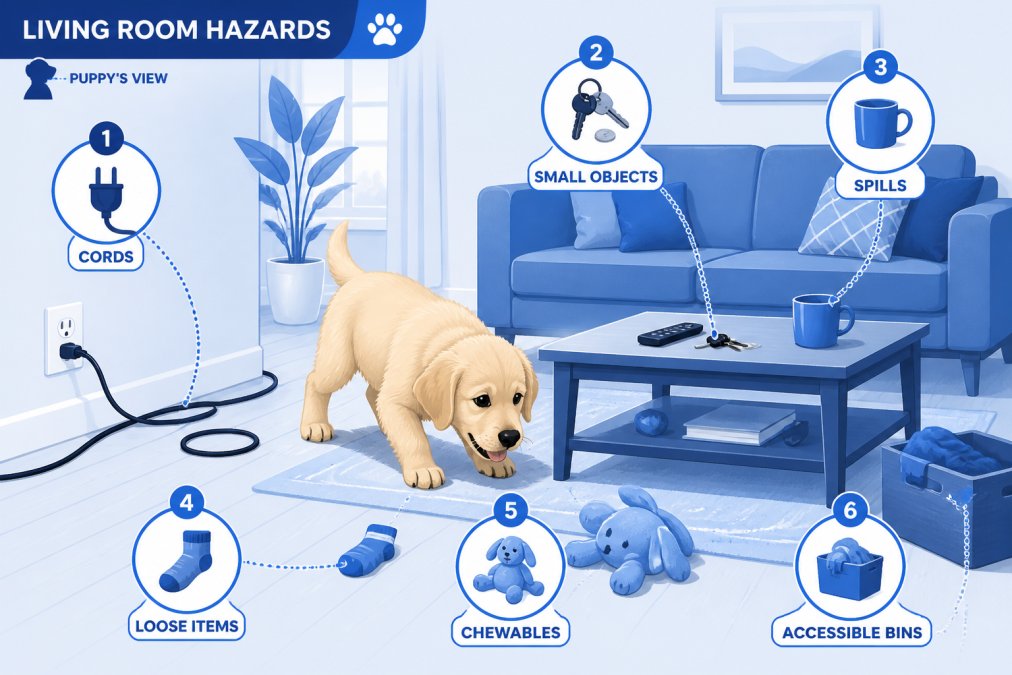
Puppy proofing involves three core components: identifying and removing hazards, securing areas where accidents can happen, and establishing containment zones where your puppy can safely play unsupervised.
Identifying Household Hazards: A Room-by-Room Assessment
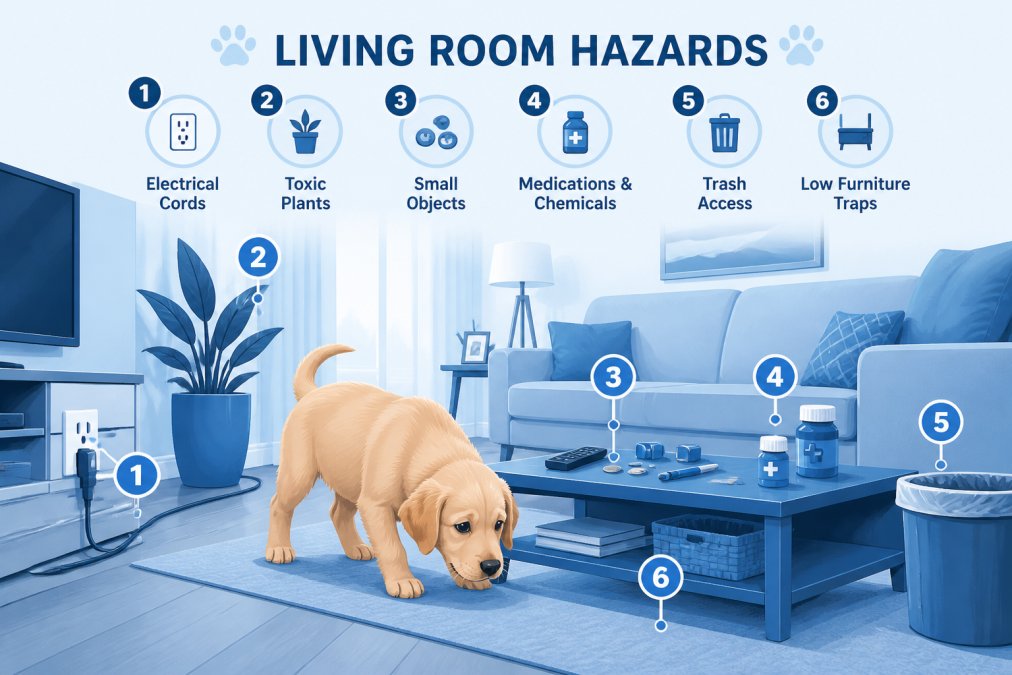
Get down on your hands and knees and see your home from your puppy's eye level. Small objects become choking hazards. Dangling cords become chew toys. Low shelves become exploration targets.
Kitchen and dining areas
Kitchens present concentrated hazard zones. Secure all cleaning supplies, medications, and chemicals in high cabinets or locked storage. Cabinet locks are essential, many puppies chew through cabinet doors. Move electrical cords near appliances behind covers or rerouting. A puppy chewing through a live cord can suffer serious injury. Keep trash cans behind closed doors or use latching bins. Food dropped on floors should be cleaned immediately; puppies have no concept of "people food" versus "dog food."
Living room and bedrooms
Living rooms often contain the most puppy-proof challenges because families leave objects scattered. Secure drapery cords and window treatments to prevent strangulation hazards. Remove or secure small decorative objects, books with loose pages, or items with parts that can be chewed off and swallowed. Keep bedroom doors closed to prevent unsupervised exploration. Remove small items from nightstands and secure electrical cords from phone chargers or lamps.
Bathrooms and laundry rooms
Bathrooms contain some of the most toxic substances in your home. Store medications, cleaning supplies, and personal care products in high cabinets with childproof locks. Keep toilet bowl cleaners inaccessible and use a locking device on the toilet lid. Laundry rooms present similar hazards, detergent pods are extremely toxic to puppies and should be kept in high, locked storage. Prevent access to laundry rooms entirely if possible, or remove all hazardous materials.
Toxic Plants for Dogs: What to Remove or Relocate
Many common household plants are toxic to dogs. Common toxic plants include lilies, sago palms, dieffenbachia, philodendron, oleander, and azaleas. The safest approach is to remove toxic plants entirely, or relocate them to high shelves or rooms where your puppy can't access them. Research any plant you keep in your home before bringing a puppy into your space.
Low-hanging plant leaves are particularly tempting to puppies. Keep potting soil covered or inaccessible, puppies often dig in soil and eat it, which can cause impaction or parasitic infection. Use decorative covers or move potted plants to elevated surfaces.
Securing Electrical Cords and Preventing Chewing Hazards
Electrical cords are among the most dangerous items in a puppy-proof home. A puppy chewing through a live cord can suffer electrical burns, heart rhythm problems, or fatal injury. Bundle cords together and secure them along baseboards using cord covers or cable management clips. Run cords behind furniture when possible. For cords that must remain accessible, use thick plastic cord covers that make them unappealing to chew and provide a barrier between the puppy's teeth and the live wire.
Extension cords and power strips should be elevated or hidden entirely. If you use extension cords, route them behind furniture and secure them so they don't dangle. Physical prevention is the safest approach, if a cord is covered or inaccessible, your puppy can't chew it.
Essential Containment: Baby Gates, X-Pens, and Crate Training
Containment is the backbone of puppy proofing your home. Baby gates create boundaries between safe zones and areas you haven't yet puppy-proofed. X-pens provide portable containment for playpens or travel. Crates offer secure confinement when you can't supervise.
Baby gates should be sturdy enough to withstand a growing puppy's weight and jumping. Hardware-mounted gates are more secure but require installation. Choose gates tall enough that your adult dog won't jump over them. X-pens create flexible containment zones and work well for creating a puppy-safe zone in living rooms or bedrooms.
How to crate train a puppy for safe confinement
Crate training teaches your puppy that the crate is a safe, comfortable space, not a punishment. Start by leaving the crate door open with treats and toys inside. Let your puppy explore at their own pace. Never force them into the crate. Reward any voluntary entry with praise and treats.
Once your puppy enters willingly, feed meals inside the crate with the door open. After a week or two of voluntary entry during meals, begin closing the door briefly while your puppy eats. Gradually extend the time the door stays closed, starting with 30 seconds after meals, then increasing to 2-3 minutes. Leave the room briefly while the door is closed, but return before your puppy becomes anxious.
Never use the crate as punishment. Introduce a verbal cue like "kennel" or "crate" when your puppy enters voluntarily. Most puppies require 4-8 weeks of consistent crate training before they're reliably comfortable with confinement.
Creating Your Puppy Proofing Checklist: Room-by-Room Action Plan
A systematic checklist ensures you don't miss hazards. Work through your home room by room, checking off items as you address them.
| Room | Hazard | Solution | Status |
|---|---|---|---|
| Kitchen | Cleaning supplies | Locked high cabinets | ☐ |
| Kitchen | Electrical cords | Cord covers or rerouting | ☐ |
| Kitchen | Trash | Latching bin or closed cabinet | ☐ |
| Living room | Drapery cords | Secured or elevated | ☐ |
| Living room | Small objects | Removed or stored | ☐ |
| Bedroom | Medications | Locked cabinet | ☐ |
| Bedroom | Cords | Covered or secured | ☐ |
| Bathroom | Toilet | Lid lock or closed door | ☐ |
| Bathroom | Medications | Locked cabinet | ☐ |
| Laundry | Detergent pods | High locked storage | ☐ |
| All areas | Toxic plants | Removed or elevated | ☐ |
| All areas | Baby gates | Installed where needed | ☐ |
| All areas | Crate | Set up and training started | ☐ |
Print this checklist and work through each room. A thorough assessment takes a few hours but prevents months of potential problems.
Budget-Friendly DIY Solutions and Apartment-Specific Tips
Puppy proofing doesn't require expensive commercial products. Cord covers can be made from PVC tubing cut lengthwise and wrapped around cords, secured with zip ties or electrical tape. Cardboard boxes can create temporary barriers in areas you need to block off. Old blankets or sheets can cover furniture your puppy targets for chewing, secured with safety pins or tape.
Apartment-specific challenges require creative solutions. Many apartments prohibit hardware-mounted baby gates, so pressure-mounted gates or x-pens become essential. Renters can't reroute electrical cords permanently, so cord covers and management clips become more important. High shelves and elevated storage protect hazardous items. Consider your puppy's size when planning containment.
Crate training should emphasize calm behavior rather than allowing excessive barking. Start with shorter confinement periods and build gradually. Storage in apartments often means under-bed containers or closet shelves, perfect for keeping puppy-proofing supplies organized.
Seasonal and Smart Home Considerations
Seasonal changes introduce new hazards. Winter brings salt and ice melt chemicals, antifreeze, and holiday decorations. Rinse your puppy's paws after outdoor time in winter. Store all de-icing products in secured, elevated storage. Holiday decorations introduce new choking hazards, tinsel, ornament hooks, and light cords all attract puppies.
Outdoor areas need puppy proofing as much as indoor spaces. Ensure fencing is secure with no gaps or holes. Check for toxic plants in your yard. Remove or secure garden tools, fertilizers, and pesticides.
Smart home devices can enhance puppy safety. Video monitors let you supervise your puppy when you're in another room. Smart door locks prevent accidental access to hazardous rooms. Motion-activated lights help you spot hazards you might otherwise miss. These technologies complement but don't replace physical puppy proofing.
Build in time for regular hazard checks as your puppy grows. What's safe for an 8-week-old puppy might be hazardous for a 6-month-old who's larger and more mobile. Review your puppy-proof setup monthly and adjust as needed.
Puppy proofing your home is an investment in your puppy's safety and your own peace of mind. The hazards are real, but they're entirely preventable with systematic attention and the right supplies. At Pet-MALL, we carry containment solutions, safety products, and enrichment items that support your puppy proofing efforts. From sturdy baby gates and durable x-pens to comfortable crates and chew-resistant toys, Pet-MALL has the premium essentials you need to create a safe, engaging environment for your new puppy. Start with your hazard assessment today, work through your room-by-room checklist, and build the secure foundation your puppy needs to grow and thrive.
Frequently Asked Questions
What should I do to puppy proof my house?
Start by identifying hazards in each room: secure electrical cords, remove toxic plants, store chemicals and medications in latching bins, use baby gates to restrict access, and set up a designated puppy-safe zone with a crate or x-pen. Remove small objects that pose choking hazards, protect baseboards from chewing with deterrents, and ensure all windows and doors are secure. Create a checklist for each room and address one area at a time to stay organized.
What household items are toxic to puppies?
Common toxic items include cleaning supplies, medications, chocolate, grapes, onions, xylitol (sugar substitute), and certain houseplants like lilies and sago palms. Store all chemicals and medications in high cabinets with child-proof locks. Keep human food out of reach, especially items containing xylitol found in sugar-free gum and candy. Many indoor plants are poisonous to dogs, so research your indoor jungle before bringing a puppy home or relocate toxic greenery to high shelves.
How do I know if my puppy proofing is actually effective?
Observe your puppy's behavior during supervised playtime in proofed areas. If your puppy shows no interest in electrical cords, can't access small objects, and stops at baby gates, your setup is working. The real test is leaving your puppy unsupervised for short periods in the puppy-safe zone and checking for any signs of destructive behavior or ingestion of forbidden items. Adjust containment strategies if your puppy escapes the x-pen or finds hidden hazards you missed.
Can I leave my puppy home alone in a proofed space?
Young puppies (8-12 weeks) shouldn't be left alone for more than 1-2 hours. A properly proofed crate or x-pen with water, toys, and a chew deterrent can keep them safe during brief absences. Older puppies (4-6 months) can handle 3-4 hours alone. Always ensure the space is secure, free of choking hazards, and that your puppy has been crate trained before relying on confinement for solo time.
What's the best way to puppy proof electrical cords?
Use cord covers or PVC tubing to shield wires from chewing. Bundle cords together and secure them along baseboards with clips or tape, keeping them away from puppy eye level. Unplug devices when not in use. Apply a chew deterrent spray to cords as an extra layer of protection. For apartment living, focus on high-traffic areas first and use cable management boxes to hide cords completely. Check regularly for damage and replace covers if they show wear.
How long does it take to fully puppy proof a home?
A thorough room-by-room assessment and setup typically takes 4-8 hours depending on home size and complexity. Start with high-priority areas like the kitchen and bedroom, then tackle lower-risk zones. Budget-friendly DIY solutions may take longer than purchasing pre-made safety gates and containment systems. Ongoing adjustments are normal as your puppy grows and discovers new ways to get into trouble, so plan for continuous refinement over the first 6-12 months.
Are there apartment-specific puppy proofing considerations?
Apartments require extra attention to rental restrictions and shared walls. Use removable baby gates instead of permanent installation, secure window treatments so drapery cords aren't accessible, and manage outdoor balcony access carefully. Focus on vertical containment since floor space is limited, and use cord covers extensively since apartments often have multiple cords in tight spaces. Coordinate with neighbors about noise during crate training, and ensure your puppy-safe zone is away from shared walls to minimize disturbance.
What's the difference between an x-pen and a crate for puppy proofing?
A crate is a small, enclosed space for sleeping and short confinement, teaching your puppy bladder control through crate training. An x-pen is a larger, open playpen that gives more freedom while still containing your puppy to a safe zone. Use both: the crate for overnight and brief absences, the x-pen for supervised playtime in a proofed area. The x-pen allows your puppy to move around and explore safely, while the crate prevents destructive behavior and supports housebreaking.
This article was written using GrandRanker