


10 Best Cat Scratching Posts for Small Apartments
Table of Contents
- Why Cats Need to Scratch and How to Stop Cat Scratching Furniture
- Quick Comparison Table: Top Scratching Posts for Apartments
- Vertical vs Horizontal Cat Scratchers: Which Works Best in Small Spaces
- Cat Scratching Post Height Requirements and Stability Standards
-
10 Best Cat Scratching Posts for Small Apartments: Detailed Reviews
- 1. SmartCat Ultimate Scratching Post: Tall and Stable
- 2. Hepper Hi-Lo Cat Scratcher: Adjustable Angles for Every Cat
- 3. PetFusion Ultimate Cat Scratcher Lounge: Dual-Purpose Design
- 4. KONG Naturals Pop-Up Incline Scratcher: Budget-Friendly Option
- 5. Frisco Cactus Cat Scratching Post: Decorative and Functional
- 6. Catit Vesper Minou Bench Scratcher: Hideaway Plus Scratching
- 7. FEANDREA Multi-Level Cat Tree: Compact Multi-Cat Solution
- 8. AmazonBasics Cat Activity Tree: Affordable Multi-Function
- 9. Mau Lifestyle Cyprus Cat Tree: Premium Design Integration
- How to Choose the Right Scratching Post for Your Apartment
- Placement Tips and Maintenance for Apartment Living
- Conclusion
Last Updated: August 25, 2026
Why Cats Need to Scratch and How to Stop Cat Scratching Furniture
Cats scratch to maintain claw health, mark territory, stretch muscles, and manage stress. It's a biological necessity, not a behavioral problem. When your cat damages furniture, the issue isn't the scratching impulse, it's that you haven't provided a better alternative. The solution is redirecting scratching to a dedicated post, not eliminating it.
Understanding your cat's needs is essential for choosing the right scratching post, especially in apartments where space is limited. A scratching post must satisfy your cat's instincts while fitting your lifestyle and layout.
Quick Comparison Table: Top Scratching Posts for Apartments
| Scratching Post | Best For | Height | Surface Type | Footprint |
|---|---|---|---|---|
| SmartCat Ultimate | Full-body stretching | 32 inches | Sisal rope | 16" × 16" |
| Hepper Hi-Lo | Multiple angles | Adjustable | Cardboard | Compact |
| PetFusion Lounge | Lounging + scratching | Low-profile | Cardboard | 24" × 10" |
| KONG Pop-Up | Budget-conscious | Adjustable | Cardboard | Minimal |
| Frisco Cactus | Decorative appeal | 22 inches | Sisal rope | Small |
| Catit Vesper Minou | Hideaway + scratching | Low-profile | Sisal | Bench-sized |
| FEANDREA Multi-Level | Multi-cat homes | 23-32 inches | Sisal | Compact |
| AmazonBasics Activity | Budget + function | 20-30 inches | Sisal/carpet | Compact |
| Mau Lifestyle Cyprus | Premium design | Varies | Sisal rope | Larger footprint |
Vertical vs Horizontal Cat Scratchers: Which Works Best in Small Spaces
Vertical scratchers satisfy cats' instinct to stretch upward and tone muscles. Horizontal scratchers appeal to cats who prefer low-angle scratching and lounging simultaneously. In small apartments, vertical scratchers offer efficiency, a 32-inch post occupies roughly 16 × 16 inches of floor space, while horizontal loungers require more square footage.
However, many cats benefit from both options. A tall vertical post for stretching combined with a horizontal scratcher for lounging provides variety and satisfies different scratching moods.
Material matters as much as orientation. Sisal rope and jute appeal to cats who like to dig and pull (peer-reviewed research). Corrugated cardboard attracts cats who prefer shredding. Observe where your cat naturally scratches on furniture to guide your choice.
Cat Scratching Post Height Requirements and Stability Standards
The ideal scratching post height allows your cat to stretch fully without their back feet leaving the ground. Most adult cats need 24 to 32 inches of vertical scratching surface (aafco.org). Stability is non-negotiable, a wobbly post teaches cats that scratching is unsafe, driving them back to furniture.
Look for a base measuring at least 16 × 16 inches with sufficient weight to prevent tipping (aspca.org). Heavier cats require posts with reinforced bases and thicker support poles. Quality construction ensures a post lasts with regular use before requiring major repairs.
10 Best Cat Scratching Posts for Small Apartments: Detailed Reviews
1. SmartCat Ultimate Scratching Post: Tall and Stable
The SmartCat Ultimate stands 32 inches tall with a 16 × 16 inch base, providing excellent vertical scratching in a compact footprint. The durable woven sisal material resists shredding better than rope, maintaining effectiveness through months of use. The solid, heavy base eliminates wobbling entirely, giving cats confidence to scratch aggressively. Assembly takes minutes with just a screwdriver. For apartments where space is limited, this post's vertical design is ideal. The SmartCat Ultimate Scratching Post typically costs around $50-$84.
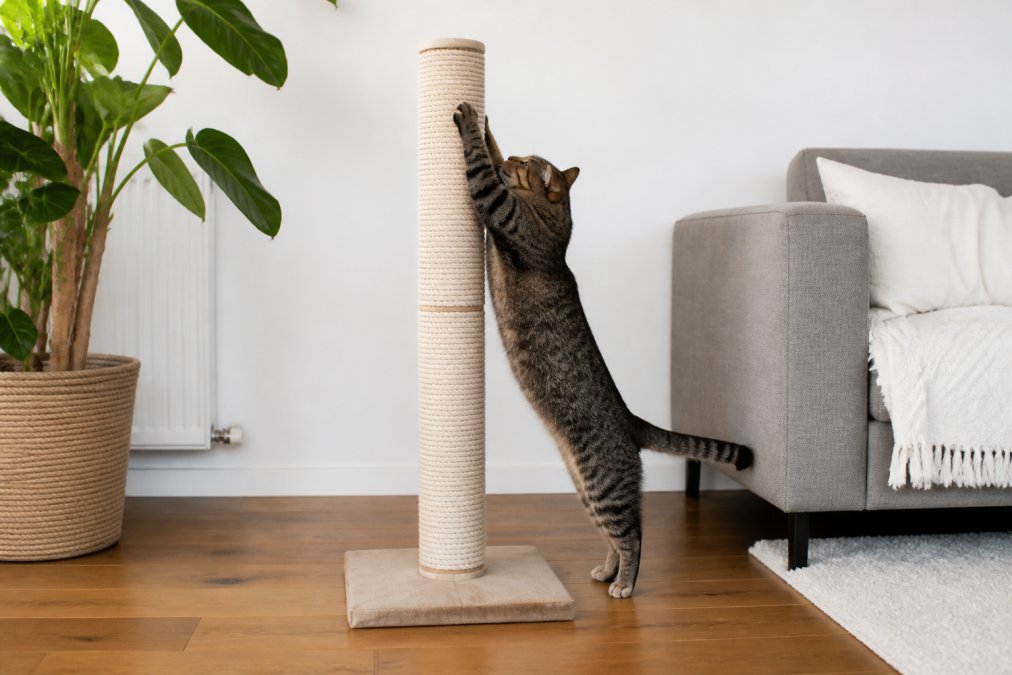
Pros: Exceptional stability, tall enough for full-body stretching, durable sisal, compact footprint, easy assembly
Cons: May be too tall for low ceilings, sisal isn't ideal for cats preferring cardboard, higher price point
2. Hepper Hi-Lo Cat Scratcher: Adjustable Angles for Every Cat
The Hepper Hi-Lo adjusts to three positions, high, low, and lower, allowing your cat to scratch at their preferred angle. The curved cardboard design with solid birch plywood frame ensures stability across all positions. Dense B-flute cardboard provides satisfying resistance, and replaceable scratch pads extend the post's lifespan. The modern design integrates into contemporary apartments better than traditional wood posts. Adjustability is the real differentiator, cats change scratching preferences with age, and this post adapts without requiring replacement. The Hepper Hi-Lo Cat Scratcher is priced around $69.99, with replacement cardboard parts available for about $34.99.
Pros: Adjustable angles, modern design, replaceable pads extend lifespan, eco-friendly, sturdy construction
Cons: Higher price than basic scratchers, requires assembly, replacement pads are an ongoing cost
3. PetFusion Ultimate Cat Scratcher Lounge: Dual-Purpose Design
The PetFusion Lounge combines scratching and lounging in one piece. The reversible cardboard surface provides two scratching textures, extending product life significantly. When one side wears down, flip it over for fresh scratching surface. Recycled corrugated cardboard construction appeals to environmentally conscious owners. The curved design encourages natural scratching angles while the hollowed center creates a cozy lounging spot. Anxious cats appreciate the enclosed space; confident cats enjoy the elevated area. The PetFusion Ultimate Cat Scratcher Lounge typically costs around $44-$75.
Pros: Reversible for extended life, dual-purpose scratching and lounging, eco-friendly, includes catnip, compact footprint
Cons: No replacement parts available, may not satisfy cats preferring vertical scratching exclusively, cardboard eventually requires full replacement
4. KONG Naturals Pop-Up Incline Scratcher: Budget-Friendly Option
The KONG Pop-Up proves you don't need to spend heavily to meet scratching needs. This cardboard scratcher provides solid functionality. The incline design appeals to cats preferring lower-angle scratching, and the reversible surface doubles usable scratching area. The flat-to-incline design offers flexibility for different preferences. KONG's Premium North American Catnip encourages immediate use. However, the lightweight construction may be too light for vigorous scratchers, determined cats can slide it rather than scratch it. The KONG Naturals Pop-Up Incline Scratcher is available for approximately $10.99-$18.99.
Pros: Affordable price, reversible surface, adjustable incline, includes catnip, lightweight and portable
Cons: May be too light for vigorous scratchers, less durable than heavier posts, limited lifespan
5. Frisco Cactus Cat Scratching Post: Decorative and Functional
The Frisco Cactus brings personality to apartment living. The playful cactus shape integrates into eclectic decor better than traditional posts. The 22-inch height accommodates most cats, and the sisal-wrapped post provides effective scratching. Plush fabric on the base encourages rubbing and scent-marking. Assembly is straightforward with just a screwdriver. The 22-inch height is adequate for most cats, though taller cats might find it slightly short for complete stretching. The Frisco Cactus Cat Scratching Post is available for around $37.20.
Pros: Unique, decorative design, easy assembly, dual-texture surfaces, stable base
Cons: 22 inches may be too short for larger cats, sisal rope wears faster than solid sisal fabric, limited height for full vertical stretching
6. Catit Vesper Minou Bench Scratcher: Hideaway Plus Scratching
The Catit Vesper Minou combines a hideaway with scratching surface. The bench design includes two entrances, creating a secure space cats instinctively seek. The curved sisal scratching mat sits on top, and memory foam cushion provides comfort. Replaceable mat and cushion extend product life. The modern oak-look finish integrates into contemporary apartments. Assembly is required, ensure secure connections before letting your cat use it. The Catit Vesper Minou Bench Scratcher is available for approximately $19.97-$119.99.
Pros: Combines hiding and scratching, modern design, replaceable parts extend lifespan, elevated vantage point, dual entrances reduce anxiety
Cons: Requires assembly, can slide apart if not assembled securely, larger footprint, higher price point
7. FEANDREA Multi-Level Cat Tree: Compact Multi-Cat Solution
The FEANDREA Multi-Level packs multiple scratching surfaces into a compact footprint. With several sisal-covered posts and multiple resting platforms, this tree serves multi-cat households efficiently. Height ranges from 23 to 32 inches, allowing vertical stretching while maintaining reasonable floor space. The particleboard construction is sturdy for most cats, though heavier cats might notice slight movement. Assembly takes 30-45 minutes. Ensure all connections are tight before use. FEANDREA Multi-Level Cat Trees are available in a range of prices, typically from $29.99 to $129.99, depending on the specific model and features.
Pros: Multiple scratching surfaces for multi-cat homes, compact footprint, several resting platforms, good value
Cons: Requires assembly, particleboard less durable than solid wood, may show movement with heavy cats
8. AmazonBasics Cat Activity Tree with Scratching Posts
The AmazonBasics Cat Activity Tree delivers functionality at accessible pricing. Multiple sisal-wrapped posts provide scratching surfaces, and soft carpeted platforms offer lounging areas. The compact design fits small apartments while serving as both scratching post and climbing structure. The carpeted surfaces offer comfort but may confuse some cats who then scratch household carpet. The multiple scratching options usually override this preference. Assembly takes 20-30 minutes with clear instructions. The AmazonBasics Cat Activity Tree with Scratching Posts can range from approximately $32.99 to $92.18, depending on the size and retailer.
Pros: Affordable price, multiple scratching surfaces, carpeted lounging areas, compact footprint, easy assembly
Cons: May not be as durable as premium options, carpeted surfaces might confuse cats, less stable than heavier posts
9. Mau Lifestyle Cyprus Cat Tree: Premium Design Integration
The Mau Lifestyle Cyprus represents premium apartment cat furniture. The minimalist design with natural wood elements and sisal rope appeals to owners prioritizing aesthetics alongside function. The Cyprus integrates into modern apartments as a design statement rather than a pet accessory. The sisal rope scratching posts provide effective scratching, and removable cushions add comfort. Sturdy construction supports vigorous scratching without wobbling. The Cyprus typically has a larger footprint, requiring dedicated space. Mau Lifestyle cat trees generally range from $189.00 to $299.00.
Pros: Elegant, minimalist design, natural wood materials, durable construction, removable cushions, premium quality
Cons: Higher price point, larger footprint than compact posts, limited availability
How to Choose the Right Scratching Post for Your Apartment
Start by observing where your cat naturally scratches. Do they target vertical surfaces like couches and curtains? They prefer vertical posts. Do they scratch horizontally on armrests and rugs? They favor horizontal or inclined scratchers.
Consider your apartment's layout and available space. Measure before ordering, a post that doesn't fit wastes money. Your cat's age and size matter: kittens use smaller posts, adult cats need sturdy structures, senior cats appreciate stability and lower-angle options.
Material preference varies by cat. Some love sisal rope's texture; others prefer cardboard's shredding quality. If unsure, start with affordable cardboard, most cats find it appealing.
Balance initial cost against expected lifespan. A post your cat ignores wastes money. A post used daily costs less per use over time.
Placement Tips and Maintenance for Apartment Living
Strategic placement determines whether your cat uses the post. Place vertical posts near windows when possible, cats enjoy watching while scratching. Corner placement provides security. Avoid isolated rooms where your cat rarely spends time.
Place the post between your cat and furniture they target. If your cat scratches the couch, position the post nearby so it becomes the easier option.
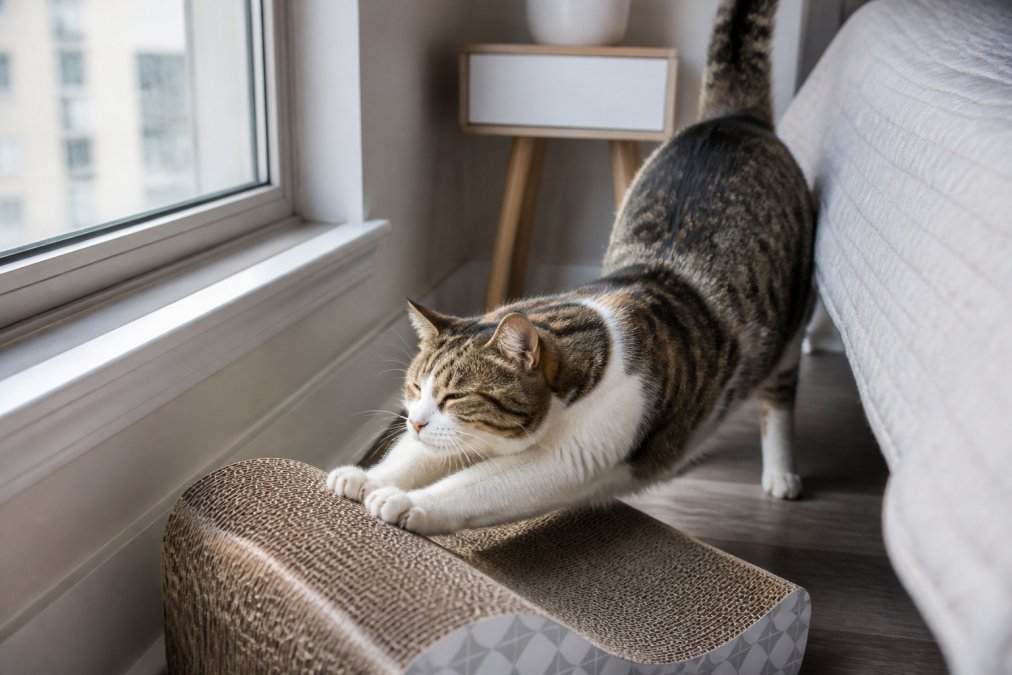
Maintenance extends post lifespan. Sisal posts need occasional light brushing. Cardboard scratchers need replacement when worn. Replace pads before posts become unusable. Sprinkle fresh catnip monthly to maintain interest.
Regular inspection prevents safety issues. Check for loose parts, cracked sisal, or unstable bases. Tighten screws periodically. A wobbly post discourages use and risks injury.
Apartment living with cats requires scratching solutions serving your cat's needs while respecting your space and budget. The posts reviewed above represent the best options for small apartments, ranging from affordable cardboard scratchers to premium design-focused pieces. Choose based on your cat's preferences, available space, and budget.
Pet-MALL offers a carefully curated selection of scratching posts and cat furniture designed for apartment living. Our premium quality ensures durability and cat appeal. With next-day delivery for orders placed by 12 PM and free shipping on all orders, getting the right scratching post to your apartment is fast and convenient. Shop Pet-MALL and give your cat the scratching solution they need while protecting your furniture and maintaining your apartment's style.
=== FAQ ANSWERS (audit these too, same rules) ===
[1] Q: How tall should a scratching post be for a cat to fully stretch? A: Most cats need at least 30-32 inches of height to stretch their full body vertically. Taller posts encourage cats to stand on their hind legs and extend upward, which helps maintain muscle tone and satisfies their natural instinct to scratch at elevated surfaces. In apartments, vertical scratching posts maximize claw maintenance in minimal floor space while providing the full-body stretch cats require for health and stress relief.
[2] Q: What's the best way to stop cat scratching on furniture in a small apartment? A: Provide attractive, accessible scratching alternatives like sisal rope posts or corrugated cardboard scratchers positioned near furniture your cat targets. Most cats will use a proper scratching post if it's convenient and satisfying. Combine this with double-sided tape or furniture covers on couch arms to discourage unwanted scratching. Cats scratch to maintain claw health, mark territory, and stretch muscles, meeting these needs with the right post usually stops furniture damage within days.
[3] Q: Are vertical or horizontal scratchers better for small apartments? A: Vertical scratchers are more space-efficient for apartments because they use floor footprint efficiently while providing full stretching height. However, many cats prefer a mix of both. Horizontal scratchers like cardboard lounges take up less vertical space and work well alongside a vertical post. The best solution combines a tall vertical post for stretching with a horizontal or angled option for variety, satisfying different scratching preferences without overwhelming your living area.
[4] Q: What material is most durable for cat scratching posts? A: Sisal rope and sisal fabric are the most durable scratching surfaces for long-term use, withstanding vigorous scratching from multiple cats. Corrugated cardboard is budget-friendly and replaceable but wears faster. Jute fiber offers moderate durability. For apartments, sisal-wrapped posts provide the best balance of longevity and stability, while reversible cardboard options offer affordability if you're willing to replace them periodically. Choose based on your cat's scratching intensity and your replacement tolerance.
Frequently Asked Questions
How tall should a scratching post be for a cat to fully stretch?
Most cats need at least 30-32 inches of height to stretch their full body vertically. Taller posts encourage cats to stand on their hind legs and extend upward, which helps maintain muscle tone and satisfies their natural instinct to scratch at elevated surfaces. In apartments, vertical scratching posts maximize claw maintenance in minimal floor space while providing the full-body stretch cats require for health and stress relief.
What's the best way to stop cat scratching on furniture in a small apartment?
Provide attractive, accessible scratching alternatives like sisal rope posts or corrugated cardboard scratchers positioned near furniture your cat targets. Most cats will use a proper scratching post if it's convenient and satisfying. Combine this with double-sided tape or furniture covers on couch arms to discourage unwanted scratching. Cats scratch to maintain claw health, mark territory, and stretch muscles, meeting these needs with the right post usually stops furniture damage within days.
Are vertical or horizontal scratchers better for small apartments?
Vertical scratchers are more space-efficient for apartments because they use floor footprint efficiently while providing full stretching height. However, many cats prefer a mix of both. Horizontal scratchers like cardboard lounges take up less vertical space and work well alongside a vertical post. The best solution combines a tall vertical post for stretching with a horizontal or angled option for variety, satisfying different scratching preferences without overwhelming your living area.
What material is most durable for cat scratching posts?
Sisal rope and sisal fabric are the most durable scratching surfaces for long-term use, withstanding vigorous scratching from multiple cats. Corrugated cardboard is budget-friendly and replaceable but wears faster. Jute fiber offers moderate durability. For apartments, sisal-wrapped posts provide the best balance of longevity and stability, while reversible cardboard options offer affordability if you're willing to replace them periodically. Choose based on your cat's scratching intensity and your replacement tolerance.
This article was written using GrandRanker